
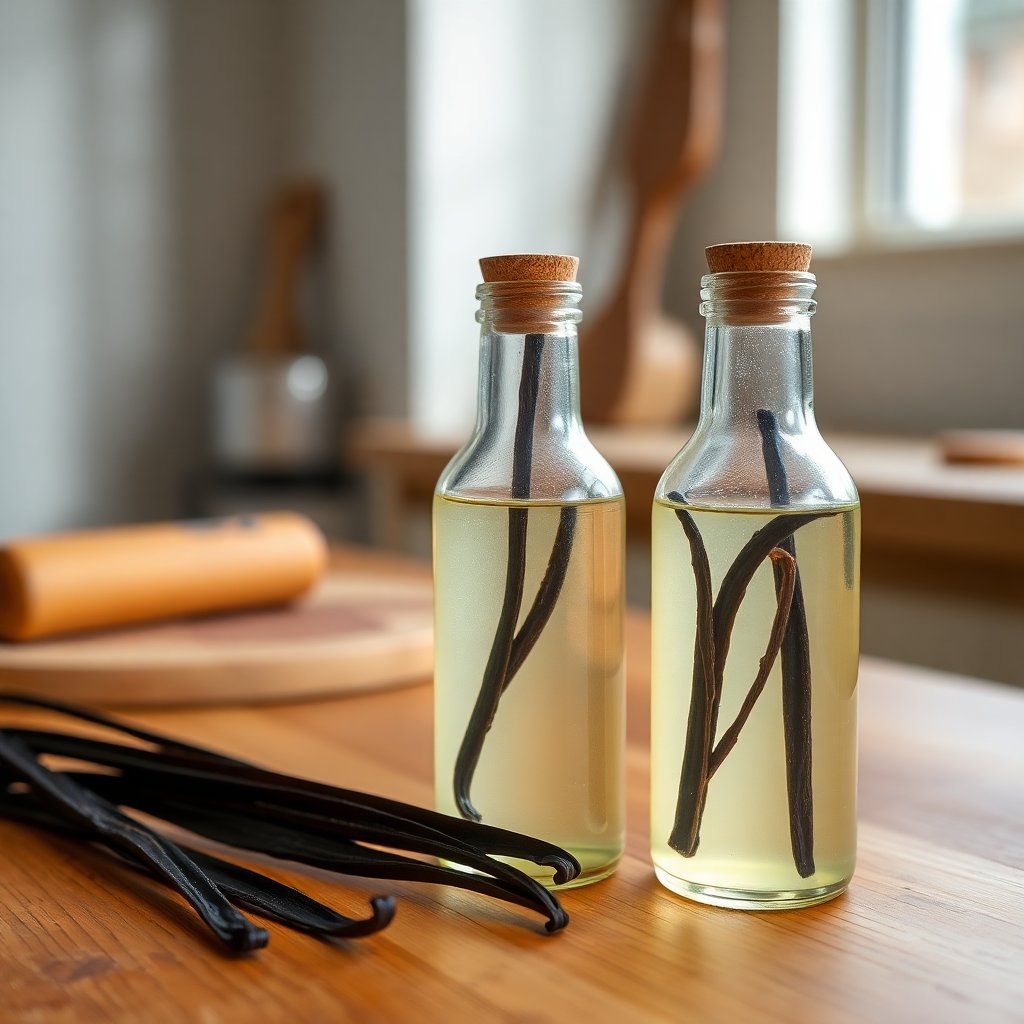
Most homemade vanilla extract starts with a bottle of vodka, and for good reason: alcohol is a fast, effective solvent that pulls flavor out of vanilla beans in a couple of months. But not every kitchen wants an alcohol-based bottle on the shelf. Some households avoid alcohol for religious or personal reasons, some bakers want something they feel comfortable handing to kids making cookies, and some people simply prefer a version with no boozy edge at all. For all of them, there's a well-established alternative: food-grade vegetable glycerin.
Glycerin-based vanilla is slower and a little different in character, but it makes a genuinely useful, giftable bottle — and it fills a gap that a rack of vodka, rum, and bourbon batches can't. If you're planning holiday gifts and want one option that works for everyone on your list, this is the batch to start now.
As an Amazon Associate we earn from qualifying purchases at no extra cost to you.
First, a quick honesty note about the word "extract"
Here's the technical wrinkle worth knowing up front. Under U.S. food rules, "pure vanilla extract" has a legal definition that requires an alcohol solution of at least 35 percent by volume — you can read the exact wording in the FDA standard of identity for vanilla extract. A glycerin-based version doesn't meet that definition, so strictly speaking it's a vanilla flavoring or a glycerite, not an "extract."
That's not a knock on it — it's just accurate labeling, and it matters if you plan to write "extract" on a gift tag. Call it "homemade vanilla flavoring (alcohol-free)" and you're being both honest and helpful to the person receiving it. It works in recipes the same way; the label is the only thing that changes.
What is food-grade glycerin, exactly?
Vegetable glycerin (glycerol) is a clear, thick, faintly sweet liquid derived from plant oils. It shows up in food, toothpaste, and skincare, and it's a common solvent for alcohol-free herbal preparations. For our purposes, three properties matter: it's a decent solvent for vanilla's flavor compounds, it's naturally a little sweet, and at a high enough concentration it resists spoilage, which is what lets a finished bottle keep for a year or more at room temperature.
The one thing to buy carefully: make sure it says food grade and USP on the label. Glycerin sold for soap-making or crafts is not intended for eating.
→ Shop food-grade vegetable glycerin on Amazon
The beans matter more here, not less
Because glycerin is a gentler solvent than alcohol, it leans harder on the quality and quantity of your beans. This is a spot to use plump, oily, aromatic pods rather than dry, brittle ones. Grade B beans — the drier grade normally recommended for alcohol extract — still work, but grade A (also called gourmet) beans, with their higher moisture and pliability, give the glycerin more to pull from and are worth the small premium in a no-alcohol batch. If you're unsure which to buy, our guide to the best vanilla beans for extract breaks down the grades and origins.
Plan on using more beans than an alcohol batch would call for. A good working ratio is at least five to six split beans per 8 ounces of glycerin solution. Skimping on beans is the single most common reason a glycerin batch comes out weak.
→ Shop split-ready vanilla beans for extract on Amazon
The recipe
For a standard 8-ounce batch:
- 5 to 6 vanilla beans, split lengthwise
- About 3/4 cup food-grade vegetable glycerin
- About 1/4 cup filtered water
That roughly 3-to-1 glycerin-to-water ratio is deliberate. Pure glycerin is thick and syrupy; a little water thins it so it flows and pours like extract, while keeping the glycerin concentration high enough to stay shelf-stable. Some makers use straight glycerin with no water for maximum keeping quality, but the diluted version is easier to work with and closer to the consistency people expect.
Step by step
- Split the beans lengthwise with a paring knife to expose the tiny seeds inside, which is where much of the aroma lives. If a bean is too long for your bottle, cut it in half so every piece sits fully below the liquid line.
- Pack the beans into a clean glass jar or bottle.
- Mix the glycerin and water, then pour over the beans until they're completely submerged. Any bean tip poking above the surface can eventually spoil, so top up or trim as needed.
- Cap tightly and shake. Give it a good shake now and again every few days for the first couple of weeks.
- Store somewhere cool and dark — a cupboard, not a windowsill. Light and heat degrade the flavor over the long steep.
If you've made a vodka batch before, this will feel familiar; the mechanics are nearly identical to our walkthrough on how to make vanilla extract at home. The beans, the splitting, the submerging, and the patience are all the same. Only the solvent changes.
The big trade-off: time
This is the honest downside. Glycerin pulls flavor more slowly than alcohol, so where a vodka batch is usable at around eight weeks and lovely by three to four months, a glycerin batch wants five to six months before it hits its stride. That long runway is exactly why late summer and early fall are the right moment to start one for the holidays — the same timing logic we lay out in our note on starting a batch now for Christmas gifting, just with a longer clock.
You can nudge it along by using more beans, splitting them thoroughly, and shaking often. A gentle warm spot (not hot) can help too, since warmth speeds extraction. But there's no rushing it to the eight-week finish of an alcohol batch — plan the calendar accordingly.
How it tastes and bakes
Glycerin vanilla has its own personality. It's a touch sweeter than alcohol extract because glycerin itself is mildly sweet, and it carries a rounder, softer vanilla note without the sharp top edge that raw alcohol gives a young extract. In baking it performs well, especially in no-bake and unbaked applications — frostings, whipped cream, custards, and cold desserts — where an alcohol extract's bite can come through and where the alcohol wouldn't cook off anyway.
In baked goods it works fine too. One practical tip: because it's a bit milder, many bakers use a slightly heavier hand, adding perhaps a quarter to a half more than a recipe's stated amount of extract. Taste and adjust to your own preference.
Storage and shelf life
A properly made glycerin batch — high glycerin concentration, beans fully submerged, stored cool and dark — will keep well for a year or more. Glycerin's spoilage resistance is doing the preserving work here in place of alcohol. Two things to watch: keep the beans under the liquid, and if you ever see fuzzy growth or smell anything off, discard it rather than gamble. That's rare with a correctly proportioned batch, but worth saying plainly since there's no alcohol acting as a backstop. This is general kitchen guidance, not food-safety certification — when in doubt, throw it out.
Bottling it as a gift
Because it's alcohol-free, this batch is the one you can give to nearly anyone — the friend who doesn't drink, the family baking with young kids, the coworker whose household avoids alcohol entirely. Lean into that on the label: "Alcohol-Free Vanilla Flavoring," the date you started it, and a short line like "great in frostings and no-bake treats." Small amber or clear glass bottles with tight screw caps show it off and keep it fresh; skip cork tops, which don't seal a syrupy liquid well over months on a shelf.
→ Shop small glass bottles for homemade extract on Amazon
The bottom line
Alcohol-free vanilla made with food-grade glycerin is slower and slightly sweeter than the vodka classic, and it isn't technically an "extract" by the legal definition — but it's a real, useful, giftable bottle that fills a spot nothing else on the shelf can. Use plenty of good beans, split them well, keep a roughly 3-to-1 glycerin-to-water mix, submerge everything, and give it five to six patient months in a cool cupboard. Start one now and you'll have a thoughtful, everyone-can-use-it gift ready by the holidays.
Affiliate note: some links above are Amazon search links and, as an Amazon Associate, we earn from qualifying purchases at no extra cost to you.
As an Amazon Associate we earn from qualifying purchases. This article contains affiliate links; if you buy through them we may earn a small commission at no additional cost to you.