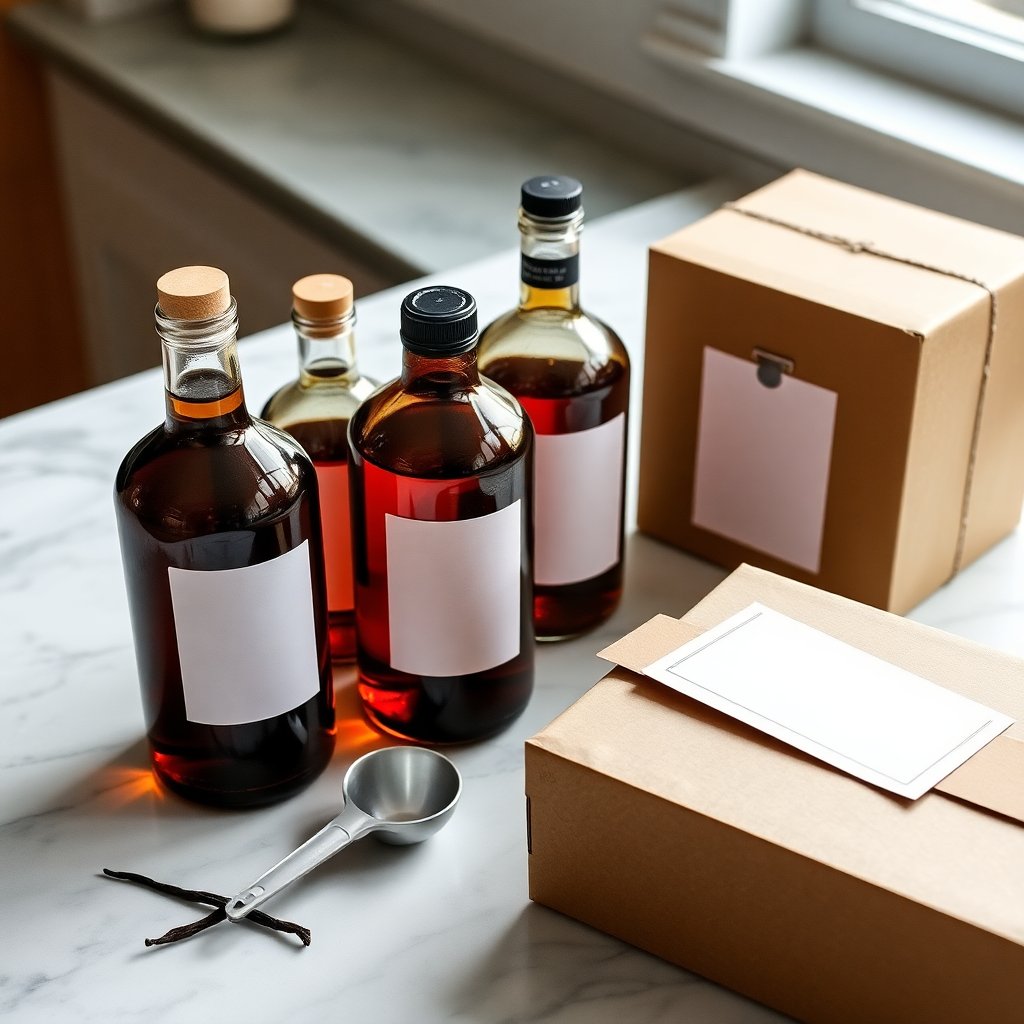
A homemade vanilla extract kit looks like the easiest possible way to start: beans, a bottle, maybe a funnel and a label, all in one box. Add vodka, wait, and you have extract. Some kits deliver exactly that. Others ship two skinny beans in a large bottle and leave you with weak, pale "extract" that tastes mostly of alcohol after two months of waiting.
The difference comes down to a few numbers most listings bury in the fine print. This guide shows you how to read a kit like a pro, which styles of kit are worth buying, and when you are better off assembling your own from bulk beans and good bottles.
Affiliate disclosure: Homebrew Vanilla earns a commission from qualifying Amazon purchases made through links on this page, at no extra cost to you. Kit contents change often, so confirm bean weight and bottle size on the current listing.
The Number That Matters: Bean Weight per Bottle
Judge every kit by grams of vanilla per ounce of alcohol, not by bean count. Bean sizes vary widely, so "3 beans" tells you almost nothing.
For reference, the U.S. standard of identity for vanilla extract in 21 CFR 169.175 calls for 13.35 ounces of vanilla beans per gallon of liquid, with at least 35% alcohol by volume. That works out to a little under 1 ounce of beans per cup (8 fl oz) of alcohol, or roughly 0.1 ounce (about 3 grams) per fluid ounce.
Most home extract makers aim for that ratio or a bit higher. In practice that often means somewhere around 5 to 7 average Grade B beans per cup, though bean weight varies so much that a kitchen scale beats counting. Our guide to how many vanilla beans per cup of vodka walks through the math in detail.
Red flags in kit listings:
- Bean count listed with no weight
- A single bean for a full 8 oz bottle
- "Vanilla bean pieces" or "cuts" without a stated weight
- Bottles much larger than the beans could ever flavor
If a kit lists 1 or 2 beans per 4 oz bottle, plan to add more beans or use less alcohol than the bottle holds.
Grade A vs. Grade B Beans in Kits
Grade B (extract-grade) beans are the right choice for extract. They have lower moisture, so you get more vanilla per gram, and they cost less. Grade A (gourmet) beans are plump and beautiful for scraping into custards, but much of their weight is water, which dilutes extract slightly. Our Grade A vs Grade B comparison explains the tradeoff.
A kit with Grade A beans is not bad; it just needs more weight to hit the same strength. A kit that does not state the grade or origin at all deserves skepticism.
Origin matters for flavor: Madagascar (Bourbon) beans give classic creamy vanilla, Tahitian beans lean floral and fruity, Mexican beans bring a spicier warmth, and Ugandan beans tend to be bold and earthy. Kits that let you pick, or that bundle two origins, make it easy to compare.
Bottle Quality
Amber or cobalt glass with a tight lid is the standard. Dark glass protects the extract from light, and a good cap keeps the alcohol from evaporating over a long steep. Watch for:
- Glass, not plastic. Avoid plastic bottles for long-term alcohol storage.
- Leak-proof caps with a liner, or swing-top stoppers with a good gasket.
- A sensible size. 4 oz and 8 oz bottles are easiest to dose correctly.
- Optional extras: orifice reducers or droppers for pouring, which make the finished bottles nicer to use and to gift.
For more on choosing glass, see our guide to the best bottles for vanilla extract storage.
Kit Styles Worth Considering
Bean-and-Bottle Kits (Add Your Own Alcohol)
The most common style on Amazon. You get beans, one or more bottles, and sometimes a funnel and labels. Alcohol is not included because it cannot be shipped like ordinary groceries, so you add vodka, bourbon, rum, or brandy yourself.
Best for: first-time makers and anyone who wants an all-in-one start. Choose kits that list bean weight and grade, and be ready to top up beans if the ratio is light.
→ Shop vanilla extract kits with bottles on Amazon
Multi-Origin Tasting Kits
Several small bottles with beans from different origins. These are a great way to learn what you like, and a lovely project to share with a baker in the family.
Best for: curious makers, gift-givers, and anyone deciding which bean to buy in bulk next time.
→ Shop multi-origin vanilla bean kits on Amazon
Build-Your-Own Kit (Often the Best Value)
Buy beans in bulk and bottles separately. For anything beyond a single bottle, this is usually cheaper per ounce of extract, and you control the ratio exactly. A typical build:
- Bulk Grade B beans (a quarter pound to a half pound goes a long way)
- A case of 4 oz or 8 oz amber Boston-round bottles with caps
- A small stainless funnel and a kitchen scale that reads in grams
- Blank labels for the start date and alcohol type
→ Shop bulk Grade B vanilla beans on Amazon
→ Shop amber glass bottles for vanilla extract on Amazon
Choosing the Alcohol
Plain 80-proof vodka is the neutral default, and it comfortably meets the 35% alcohol standard. Bourbon adds caramel notes, rum adds sweetness, and brandy adds fruit. Avoid flavored spirits, and skip very cheap bottles with harsh flavors; whatever you taste in the alcohol will end up in the extract.
A Note on Timing
Homemade extract needs time. Most makers consider it usable at around eight weeks, and it keeps improving for months after that. A kit started in the last days of October is right at the edge of being ready for Christmas baking. If you are starting later, plan these as New Year or Valentine's gifts, or give the bottle with a "ready on" date on the label so the recipient knows when to start using it.
How to Use a Kit for the Best Results
- Weigh the beans that came with the kit and compare to the bottle size.
- Add beans or reduce alcohol if the ratio is light.
- Split the beans lengthwise and cut them to fit, so the seeds are exposed to the alcohol.
- Fill with alcohol, cap tightly, and label with the start date.
- Shake weekly and store in a cool, dark cupboard.
- Taste after eight weeks, then keep the beans in and let it continue to deepen.
Common Kit Mistakes to Avoid
Filling the bottle to the top without checking the ratio. The bottle size in a kit is not a recipe. If the beans are light, the right move is less alcohol, not a full bottle of weak extract.
Leaving whole beans unsplit. A whole pod extracts slowly. Splitting it lengthwise and cutting it into pieces that sit fully submerged speeds things up and gives a more even flavor.
Storing it on a sunny windowsill. Light and heat degrade flavor over time. A cupboard away from the stove is ideal; the amber glass helps, but it is not a substitute for a dark shelf.
Throwing the beans away too early. Once the first batch is done, the beans still hold flavor. Many makers top the bottle up with fresh alcohol and a new bean or two to keep a "perpetual" bottle going, or dry the spent pods to make vanilla sugar.
Judging it at two weeks. Young extract tastes sharp and boozy. Give it the full eight weeks before deciding the kit was a dud. If it is still pale and thin by then, the ratio was too light, and adding beans will fix it.
Kits as Gifts
A well-chosen kit makes a good gift for a home baker, because it is a project rather than a finished product. To make it feel complete, pair the kit with a bottle of good vodka or bourbon, a small kitchen scale, and a handwritten card with the ratio and the date it will be ready. If the kit is light on beans, tuck in a few extra pods so the first batch turns out properly.
The Bottom Line
A good vanilla extract kit is a convenient start, but only if it includes enough vanilla. Look for listed bean weight close to the standard ratio of a little under an ounce per cup of alcohol, Grade B extract beans with a stated origin, and dark glass bottles with tight caps. If you plan to make more than one or two bottles, building your own kit from bulk beans and a case of amber bottles almost always gives you stronger extract for less money. Either way, weigh your beans, be patient, and label the start date.
As an Amazon Associate we earn from qualifying purchases. This article contains affiliate links; if you buy through them we may earn a small commission at no additional cost to you.