
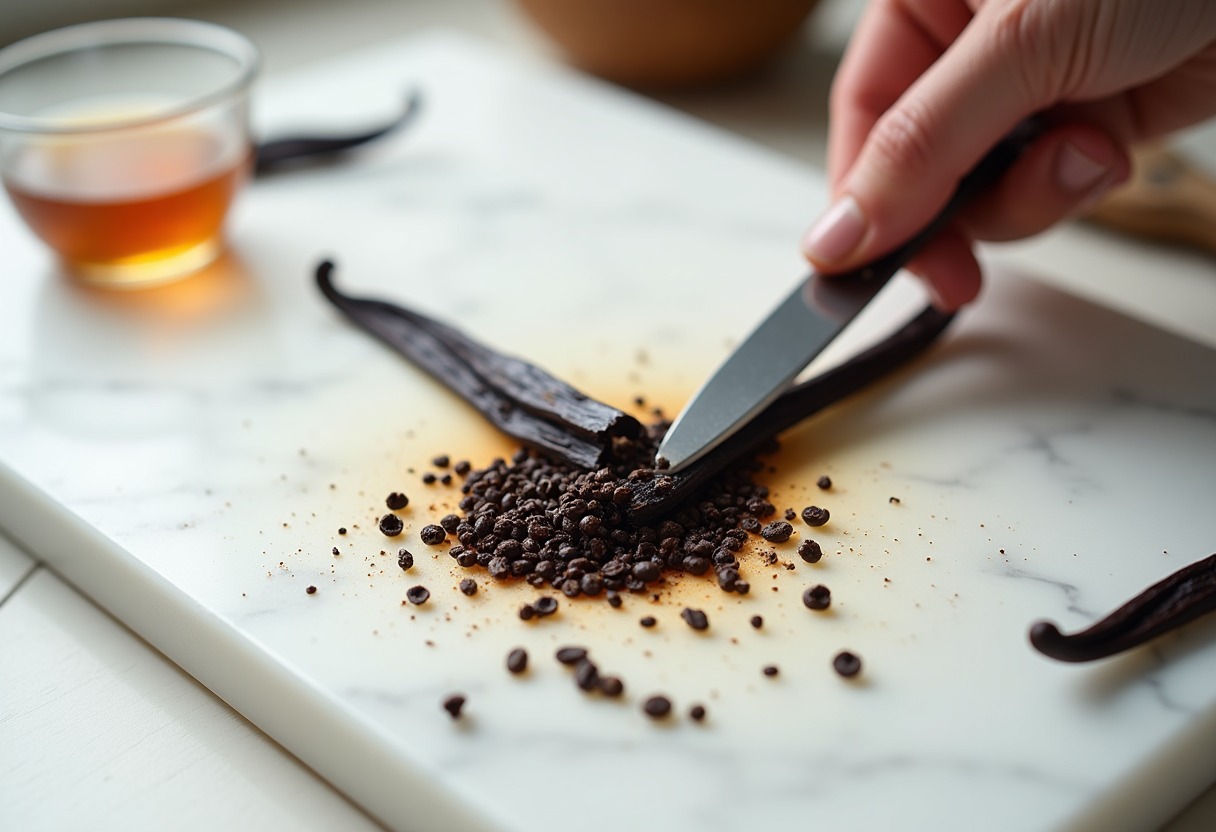
Splitting vanilla beans correctly increases your extract yield by 35-40% compared to whole beans. The exposed vanilla caviar seeds and interior surface area dramatically accelerate flavor extraction, turning what would be a 12-month aging process into a 6-8 month timeline for full strength.
Why Proper Bean Splitting Makes Your Extract Stronger
Vanilla's flavor compounds — primarily vanillin, vanillic acid, and over 250 other aromatic molecules — concentrate in two locations: the tiny seeds (vanilla caviar) and the interior pod walls. When you leave beans whole, alcohol can only extract compounds from the outer surface and whatever seeps through the pod over months of aging.
According to the FDA's vanilla extract standards, commercial extract requires 13.35 ounces of vanilla beans per gallon of alcohol to meet legal strength requirements. Home extractors who split their beans properly can achieve equivalent strength using 20% fewer beans because the exposed interior surfaces release compounds immediately rather than gradually.
The splitting technique also determines how much sediment ends up in your finished extract. Poor splitting creates jagged edges and loose seed fragments that cloud your extract. Clean splitting preserves the pod structure while maximizing exposure.
The Step-by-Step Splitting Technique
Start with room temperature beans — cold beans crack instead of splitting cleanly. Remove beans from refrigeration 30-60 minutes before preparation.
Position your → Shop paring knife set on Amazon at a 45-degree angle to the bean, about 1/2 inch from the stem end. The stem end (the thicker, woody tip) stays intact to hold the pod together. Insert the knife tip just deep enough to penetrate the pod wall — you'll feel slight resistance, then the knife slips through.
Draw the knife lengthwise down the bean in one smooth motion, stopping 1/2 inch from the opposite end. Maintain consistent pressure; too light and you won't cut through completely, too heavy and you'll slice the bean in half.
Open the split pod like a book. The interior should reveal a glossy, dark paste studded with thousands of tiny black seeds. Grade A beans show moist, oily interiors with seeds that cling to the pod walls. If your beans appear dry or the seeds fall out easily, check our guide on Best Vanilla Beans For Extract for sourcing recommendations.
For maximum extraction, scrape one-third of the vanilla caviar seeds from each pod using the knife tip. Too much scraping removes the seeds' natural moisture barrier and creates excessive sediment. Leave most seeds attached to the pod walls — they'll release slowly during aging for sustained flavor development.
Splitting Methods: Results Comparison
| Method | Extraction Speed | Sediment Level | Flavor Intensity | Difficulty | |--------|------------------|----------------|------------------|------------| | Lengthwise Split + Partial Scrape | Fast (6-8 months) | Low | High | Easy | | Lengthwise Split Only | Medium (8-10 months) | Very Low | Medium-High | Easy | | Crosswise Cuts | Very Fast (4-6 months) | High | Very High | Medium | | Whole Beans | Slow (12+ months) | None | Medium | None |
Essential Tools for Clean Bean Preparation
A sharp → Shop vanilla bean splitter knife on Amazon prevents tearing and ensures consistent splits. Purpose-built bean knives feature thin, flexible blades that follow the pod's natural curve.
Quality → Shop vanilla bean pods on Amazon make splitting easier and more effective. Plump, oily beans from Madagascar or Tahiti split cleanly with minimal seed loss. Our Madagascar Vs Tahitian Vanilla Beans comparison helps you choose the right variety for your extract goals.
Store prepared beans in → Shop glass extract bottles on Amazon immediately after splitting. Exposure to air quickly diminishes the volatile compounds you've just exposed.
Use a → Shop fine mesh strainer on Amazon when transferring finished extract to remove any loose seeds or pod fragments. This step ensures professional-looking extract without cloudiness.
Keep your knife clean between beans to prevent cross-contamination of flavors, especially when working with different vanilla origins. A quick wipe with a damp cloth removes residual oils and seeds.
Advanced Extraction Techniques Most Guides Skip
Temperature manipulation accelerates initial extraction without sacrificing quality. After placing split beans in alcohol, store the jar in a consistently warm location (75-80°F) for the first two weeks. This gentle warmth speeds molecular movement and helps alcohol penetrate deeper into pod tissues.
The "double-split" technique works especially well for thick Madagascar beans. Make your primary lengthwise split, then add 2-3 shallow diagonal cuts across each pod half. This creates additional surface area without over-fragmenting the beans. Reserve this technique for Grade A Vs Grade B Vanilla Beans that are particularly plump and oily.
Aging position affects extraction efficiency. Store jars horizontally for the first month, rotating weekly. This ensures alcohol contacts all pod surfaces equally. After initial extraction begins, store upright and shake monthly.
Consider the alcohol-to-bean ratio carefully. The standard How Many Vanilla Beans Per Cup Of Vodka ratio assumes whole beans. Split beans extract 35-40% more efficiently, so you can reduce bean quantities accordingly while maintaining strength.
For professional-grade consistency, weigh your beans rather than counting. Split beans should total 1 ounce per cup of alcohol for single-strength extract, or 2 ounces per cup for double-strength varieties covered in our Double Extract Vanilla Beans guide.
FAQ
How deep should I cut when splitting vanilla beans for extract? Cut just deep enough to penetrate the pod wall completely — typically 1-2mm for most beans. The knife should slide through with slight resistance, then move freely along the pod's length. Cutting too deep risks slicing the bean in half, while too shallow leaves sections unsealed that won't expose interior surfaces. Grade A Madagascar beans typically require slightly deeper cuts due to their thicker pod walls compared to thinner Tahitian varieties.
Should I remove all the vanilla seeds when scraping beans for extract? Remove only 25-30% of the seeds through gentle scraping with your knife tip. Leaving most seeds attached to the pod walls provides sustained flavor release during aging, while the scraped seeds create immediate extraction. Complete seed removal creates excessive sediment and removes the natural moisture that helps preserve volatile compounds. The remaining attached seeds also indicate extract quality — their presence shows you used real vanilla beans rather than artificial flavoring.
Can I use the same splitting technique for dried out vanilla beans? Dried beans require rehydration before splitting to prevent cracking and excessive seed loss. Wrap beans in slightly damp paper towels and store in a sealed container for 2-4 hours until they regain flexibility. Alternatively, steam them briefly over boiling water for 30-60 seconds. Properly rehydrated beans should bend without breaking and feel supple rather than brittle. Splitting dried beans without rehydration creates jagged cuts and powdery seed fragments that cloud your extract.
How long can I store split vanilla beans before making extract? Use split beans within 24-48 hours for optimal results. Once split, the exposed interior begins losing volatile compounds to air oxidation. If you must delay, wrap split beans tightly in plastic wrap and refrigerate, but expect some flavor loss after 3-4 days. The vanilla paste inside the pods darkens and loses its glossy appearance when exposed to air too long. For best results, split beans immediately before adding them to your chosen alcohol.
What's the difference between splitting techniques for single vs double extract? Double-strength extract benefits from more aggressive splitting since you're using twice the bean concentration. Make deeper lengthwise cuts and add 2-3 diagonal crosscuts per pod half to maximize surface area. Single-strength extract requires gentler handling to prevent over-extraction and excessive sediment. The higher bean-to-alcohol ratio in double extract also means more natural oils and compounds to balance any additional sediment from aggressive splitting. Monitor both versions during aging and adjust your technique based on clarity preferences.
Master the splitting technique once, and every batch of homemade extract will surpass store-bought versions in both strength and complexity.
Some links on this page are affiliate links. We may earn a small commission if you purchase through them, at no extra cost to you.
As an Amazon Associate we earn from qualifying purchases. This article contains affiliate links; if you buy through them we may earn a small commission at no additional cost to you.