Most homemade vanilla extract reaches peak flavor at 12-18 months of aging, though significant improvement happens in the first 8 weeks. The difference between adequate extract and exceptional extract lies in understanding the vanillin extraction timeline and having the patience to let chemistry work.
Understanding the Vanilla Extract Maturation Process
Vanilla extract develops through two distinct chemical processes: rapid initial extraction and slow flavor maturation. During the first weeks, alcohol pulls vanillin and other compounds from the bean pods. The U.S. Food and Drug Administration requires commercial vanilla extract to contain at least 13.35 ounces of vanilla beans per gallon of 35% alcohol, but homemade extract makers typically use higher ratios for stronger flavor.
The initial extraction phase completes within 4-8 weeks for most vanilla bean varieties. Madagascar bourbon vanilla beans extract fastest due to their higher vanillin content, while Tahitian vanilla develops more slowly because of different compound structures. Grade B beans, preferred for extract making, have lower moisture content that allows alcohol to penetrate more efficiently than Grade A beans.
After the initial extraction, secondary compounds continue developing. Vanillic acid, 4-hydroxybenzaldehyde, and other phenolic compounds undergo subtle transformations that create the complex flavor profile distinguishing aged extract from fresh extract. This maturation process explains why professional distillers age their vanilla extracts for years before bottling.
The Complete Vanilla Extract Aging Timeline
Understanding specific aging milestones helps you track your extract's development and know when to taste-test. Each stage brings distinct characteristics worth recognizing.
Weeks 1-2: Initial Extraction The alcohol turns amber within 24-48 hours as it begins pulling compounds from the vanilla beans. At this stage, the extract tastes harsh and alcoholic with sharp vanilla notes. The color deepens daily, but flavor remains unbalanced.
Weeks 3-8: Primary Development The extract becomes usable for baking by week 6, though still aggressive compared to aged versions. Color stabilizes at deep amber. Most vanillin has extracted, but secondary compounds remain underdeveloped. This extract works well in recipes calling for strong vanilla presence.
Months 3-6: Flavor Integration The extract develops smoother characteristics as compounds integrate. Alcohol bite diminishes noticeably. During this period, vanilla bean pods can be topped off with additional alcohol to extend the batch. The extract develops enough complexity for delicate applications like custards and ice creams.
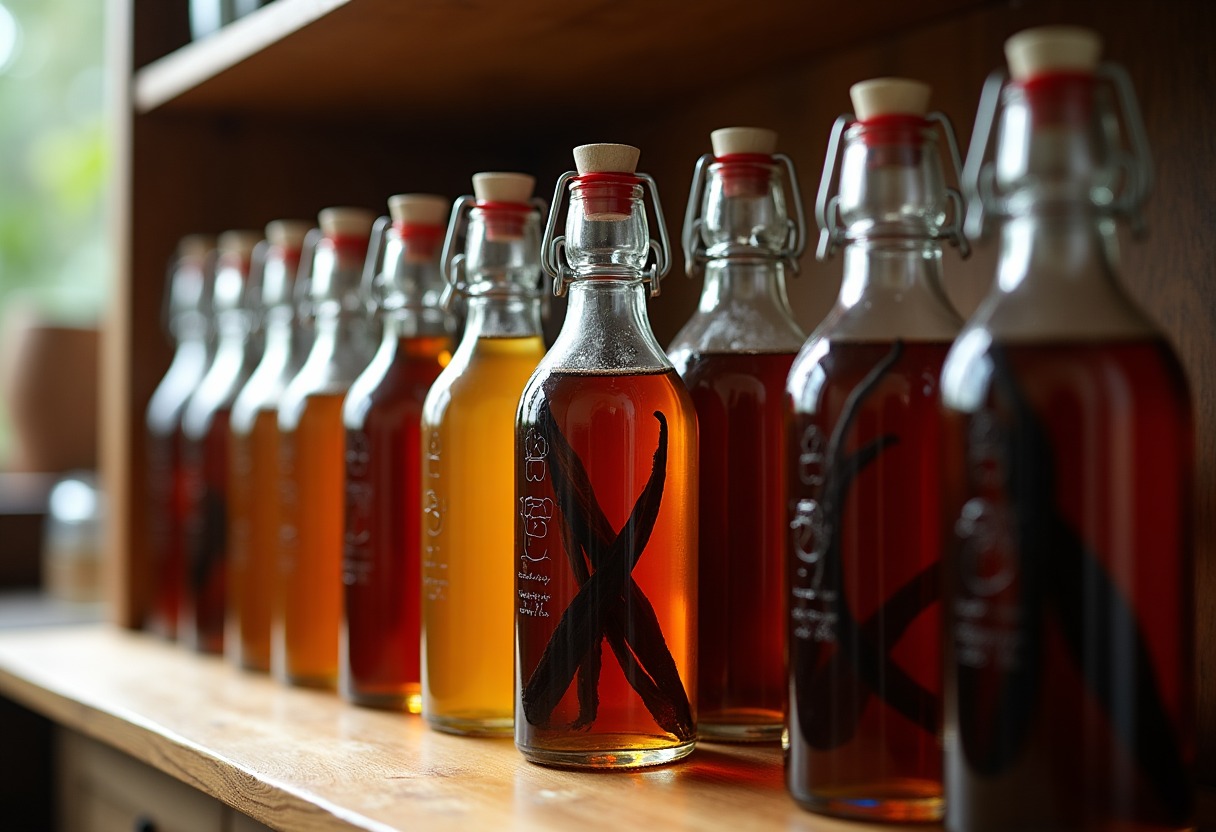
Months 7-12: Maturation Peak Approaches The extract reaches professional quality. Harsh notes disappear while retaining intensity. This stage produces extract suitable for all baking applications. Many home extractors find 8-month extract indistinguishable from store-bought premium versions.
Months 12-24: Peak Flavor Development The extract achieves maximum complexity and smoothness. Vanilla notes become nuanced with subtle undertones varying by bean origin. Madagascar vanilla develops creamy, rich characteristics while Tahitian vanilla shows floral complexity.
Here's how aging time affects flavor characteristics across different applications:
| Aging Time | Flavor Profile | Best Applications | Color Intensity | |------------|----------------|------------------|-----------------| | 6-8 weeks | Sharp, alcoholic, basic vanilla | Strong-flavored baking (chocolate cakes) | Light amber | | 3-6 months | Developing smoothness, good vanilla presence | Most baking applications | Medium amber | | 8-12 months | Well-balanced, professional quality | All applications including delicate desserts | Deep amber | | 12-24 months | Peak complexity, smooth finish | Premium applications, gift-giving | Rich dark amber |
Essential Equipment for Long-Term Aging
Proper storage equipment ensures optimal aging conditions and prevents contamination during long extraction periods. The aging environment significantly affects final quality, making equipment choices critical for success.
→ Shop amber glass bottles on Amazon for UV protection during aging. Amber glass blocks harmful light wavelengths that degrade vanillin over time. Eight-ounce bottles work best for home batches, providing enough volume while allowing easy monitoring.
→ Shop swing top bottles on Amazon for convenient access during aging. Swing-top closures create better seals than cork or screw-on caps, preventing alcohol evaporation during long aging periods. The tight seal also prevents oxidation that can affect flavor development.
Temperature control matters more during extended aging. Store bottles in locations maintaining 60-70°F consistently. Basements, pantries, and interior closets provide stable conditions better than kitchen cabinets near heat sources.
→ Shop kitchen storage labels on Amazon to track aging progress. Label each bottle with bean variety, alcohol type, start date, and bean-to-alcohol ratio. This information becomes valuable when comparing batches or planning future extracts.
For serious extract makers, consider multiple smaller bottles rather than single large containers. This approach allows sampling different aging stages without disturbing the entire batch. It also enables gifting aged extract while maintaining your primary aging stock.
Advanced Aging Techniques for Maximum Flavor
Temperature cycling accelerates certain aspects of flavor development without compromising quality. Allow bottles to experience natural temperature variations between 60-75°F rather than maintaining constant temperatures. This gentle cycling encourages compound interaction while avoiding the harsh conditions that damage vanilla molecules.
Double extraction maximizes bean utilization during extended aging. After 6-8 months, strain the original beans and introduce fresh pods to the existing extract. This technique produces incredibly concentrated vanilla flavor while using the aged alcohol base that already contains extracted compounds. The second round of beans extracts faster due to the alcohol's pre-existing vanilla content.
Bean refresh maintains extraction potency during very long aging periods. After 12 months, add 1-2 fresh vanilla beans to existing bottles. The fresh beans provide additional extractable compounds while the aged extract continues maturing. This technique works especially well with Grade B vanilla beans due to their lower moisture content.
Alcohol topping extends aging without diluting flavor. As alcohol evaporates during long aging, add small amounts of matching alcohol to maintain original ratios. Use the same alcohol type as the original batch - switching from vodka to bourbon mid-aging creates flavor inconsistencies.
Decanting improves clarity without affecting flavor. After 12+ months, sediment sometimes settles in aging extract. Carefully pour clear extract into clean bottles, leaving sediment behind. This step purely improves appearance - sediment doesn't negatively affect flavor or safety.
Frequently Asked Questions
How do I know when my vanilla extract has reached peak flavor development? Peak flavor typically occurs between 12-18 months, recognizable by smooth vanilla taste without alcohol harshness, rich amber color, and complex aromatic profile. The extract should smell deeply vanilla-forward without sharp alcohol notes when you open the bottle. Taste-test monthly after the 8-month mark - when consecutive tastings show no improvement, your extract has peaked. Most home extractors find their extract reaches this point around the one-year mark.
Can vanilla extract continue improving after 2 years of aging? Extract quality plateaus around 18-24 months for most bean varieties and alcohol combinations. Beyond this point, you may notice diminishing returns or even slight degradation in some cases. However, properly stored extract remains excellent for years - the question becomes whether continued aging provides meaningful improvement. Many extractors maintain perpetual batches, regularly using aged extract while continuously adding fresh alcohol and occasional bean refreshes.
Does the type of alcohol affect how long I should age my vanilla extract? Different alcohols reach peak flavor at different rates, though the overall timeline remains similar. Vodka-based extracts typically peak around 12-15 months due to neutral flavor that allows vanilla compounds to dominate. Bourbon-based extracts may require 15-18 months as the whiskey's complexity needs additional time to integrate with vanilla flavors. Rum-based extracts often show excellent results at 10-14 months due to complementary flavor compounds already present in the rum.
Should I remove vanilla beans after a certain aging period? Leaving beans in the extract indefinitely generally improves flavor rather than harming it, contrary to common concerns about over-extraction. The beans continue providing subtle compounds and help maintain extraction strength. However, some extractors prefer removing beans after 12-18 months to prevent any possible bitter compounds from very long extraction. If you choose to remove beans, strain carefully to avoid disturbing sediment, and consider the extract at peak quality immediately after straining.
How can I speed up the vanilla extract aging process without compromising quality? While true aging cannot be rushed, several techniques can optimize extraction efficiency within the natural timeline. Use Grade B vanilla beans which extract faster than Grade A, maintain consistent temperatures around 70°F, and ensure beans are properly split to expose maximum surface area to alcohol. Gentle agitation weekly during the first two months helps distribute compounds, but avoid aggressive shaking which can create unwanted cloudiness. Some extractors use sous vide methods at low temperatures (100-110°F) for 24-48 hours to jump-start extraction, though this requires careful temperature control to avoid damaging delicate vanilla compounds.
Patience transforms good vanilla extract into exceptional vanilla extract - the 12-18 month aging window separates adequate homemade vanilla from liquid that rivals the world's finest commercial offerings.
Some links on this page are affiliate links. We may earn a small commission if you purchase through them, at no extra cost to you.
As an Amazon Associate we earn from qualifying purchases. This article contains affiliate links; if you buy through them we may earn a small commission at no additional cost to you.