
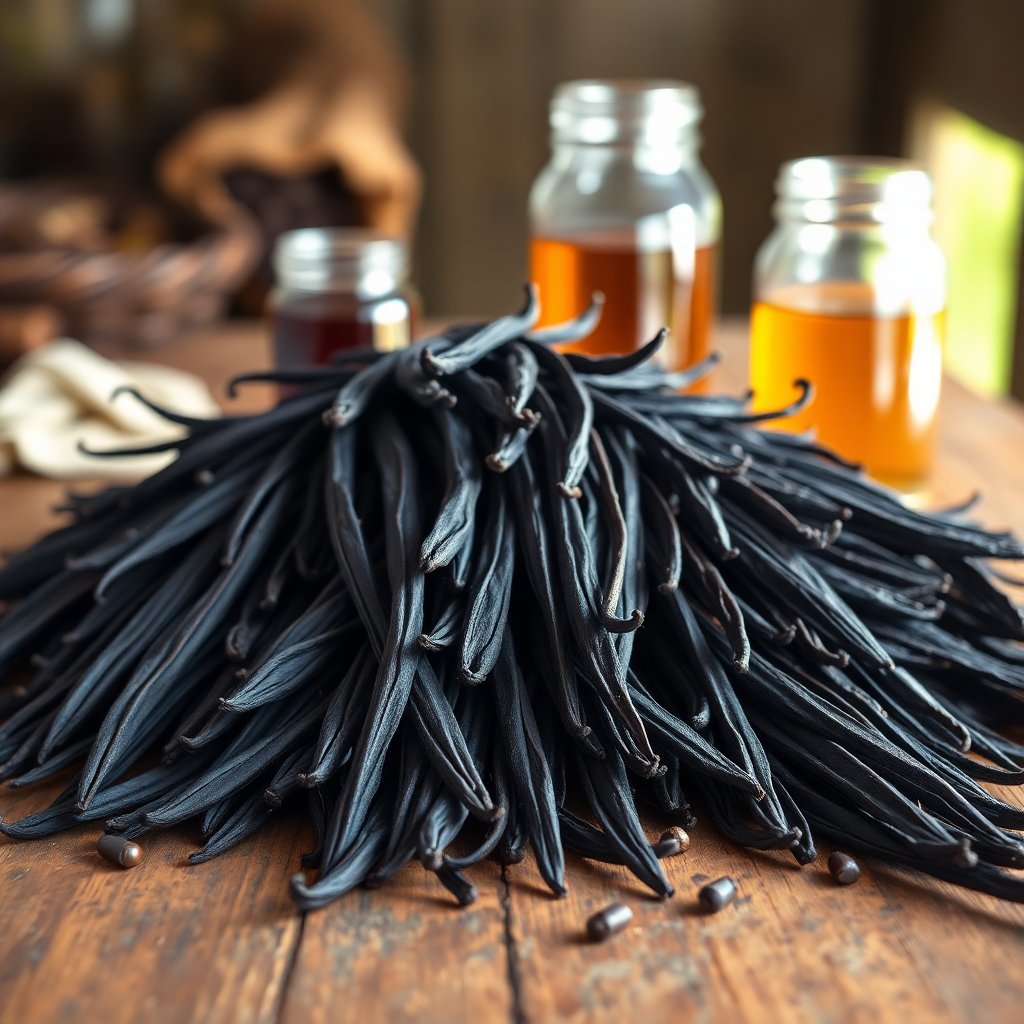
Vanilla, the spice that once briefly traded for more per kilogram than silver, has quietly collapsed in price. For anyone who makes extract at home, the numbers are astonishing: after years of painful sticker shock, the world is now swimming in cured beans, and wholesale prices have fallen to inflation-adjusted lows not seen in roughly a decade.
If you've been rationing your beans or buying two at a time, stop. This is the moment to buy in bulk, fill a jar, and start a long, slow age. Here's exactly what happened, what the real prices look like right now, and how to shop the glut without getting burned.
The Short Version: Madagascar Is Drowning in Beans
Madagascar grows roughly 80% of the world's vanilla, so when Madagascar has a big harvest, the whole market moves. And Madagascar has had a very big couple of years.
The country produced more than 4,000 metric tons of cured vanilla in 2025, with another 3,000-plus tons expected in 2026. That is far more than global demand can absorb. The result is textbook oversupply — warehouses full of beans, exporters undercutting each other, and prices sliding month after month.
To put the scale of the drop in context: Madagascar's average export price in the fourth quarter of 2025 fell roughly 40% year over year, landing around $38 per kilogram, down from about $63.6 per kilogram the year before. Some distressed lots have reportedly changed hands for as little as $10–16 per kilogram. Compare that to the 2018 peak, when top-grade vanilla briefly hit around $600 per kilogram and genuinely cost more than silver by weight. The market has come almost all the way back down to earth.
What this means for you: the beans that felt like a splurge in 2019 are now, in real terms, cheaper than they've been in years. If you make your own extract, that's a rare gift.
→ Shop Madagascar vanilla beans on Amazon
As an Amazon Associate we earn from qualifying purchases.
Why Prices Fell So Hard
Three forces stacked on top of each other to create this crash.
A supply hangover from the boom years. When prices spiked to hundreds of dollars per kilogram between 2015 and 2019, farmers all over Madagascar — and in Uganda, Indonesia, Papua New Guinea, and elsewhere — planted more vines. Vanilla takes three to four years to come into full production, so that planting surge is only now landing as harvest. The high prices planted the seeds of the low prices.
Demand cooled. During the price spike, big food manufacturers quietly reformulated products to use less natural vanilla or switched to synthetic vanillin. Some of that demand never came back, which left even more real beans looking for a buyer.
Everyone tried to sell at once. With prices falling, holders of inventory got nervous and pushed beans onto the market rather than sitting on a depreciating asset. That's the classic downward spiral of a commodity glut: falling prices trigger more selling, which pushes prices down further.
The official minimum export prices set by Madagascar — around $50 per kilogram for cured black beans, $25 for Grade 1 long red, and $15 for Grade 3 cuts — are meant to put a floor under the market. In practice, those floors are routinely undercut when exporters are desperate to move volume. The posted minimums tell you what the government wants the price to be, not what beans are actually trading for.
Can the "Vanilla Alliance" Buyback Fix It?
Madagascar's government isn't sitting still. A state-backed group informally called the Vanilla Alliance is reportedly spending around $38 million to buy back roughly 600 tonnes of vanilla in an effort to prop up prices and support farmers.
It's a real intervention, but exporters are openly skeptical that it will work. Their argument is simple and hard to dispute: 600 tonnes is a small dent against a structural surplus measured in thousands of tonnes, with more coming next season. Buying back a slice of one year's excess doesn't change the fact that the vines are still in the ground and still producing. You can read the exporters' case in this report from Ecofin Agency, which lays out why a one-time buyback may fail to solve an ongoing oversupply problem.
For a home buyer, the takeaway is encouraging: the odds that prices snap back to boom-era levels in the next year or two are low. Structural gluts tend to unwind slowly. That gives you a comfortable window to stock up.
The Catch: Quality Is Uneven in a Glut
Here's the part most "vanilla is cheap now" takes miss. A flood of beans is not the same as a flood of good beans, and 2025's harvest was genuinely inconsistent.
Interestingly, the humble Grade 3 cuts — the short, split, cosmetically ugly beans that extract makers love — reportedly came in excellent this cycle, with strong aroma and cure. Meanwhile, some Grade 1 "gourmet" lots disappointed on the one number that actually matters for extract: vanillin content. Reported figures had Grade 1 beans landing around 1.6–1.8% vanillin while some Grade 3 cuts came in lower, near 1.0–1.2%, though these numbers vary lot to lot and should be treated as reported ranges rather than guarantees.
The lesson: buy on assayed quality and cure, not on the "Madagascar" label or the grade name alone. A gorgeous Grade A bean that was rushed through curing can underperform an ugly, well-cured Grade B cut. If you're new to the difference between the grades, our breakdown of Grade A vs Grade B vanilla beans explains why the "lower" grade is usually the right call for extract anyway.
What to look for in a glut market:
- Moisture and flexibility. A good extract bean bends without snapping and smells deeply of vanilla, not smoke or must.
- A stated vanillin percentage when the seller provides one. Higher is better, but consistency across the lot matters just as much.
- No mold, no ammonia smell. Distressed, poorly stored beans are exactly the kind of thing that gets dumped when prices crash. Cheap is only a bargain if the beans are sound.
→ Shop Grade A vanilla beans on Amazon
How to Buy Smart in the 2026 Buyer's Market
This is a rare setup: prices are low, Grade 3 cuts are strong, and extract rewards patience. Here's how to take advantage.
Buy more than you think you need
Extract only gets better with age. A batch you start today will taste far richer in twelve months and better still at two years. Because cured beans keep well when stored properly, buying a larger quantity now and aging it is genuinely a smart move rather than a gamble. If you want to keep beans for months before you extract, our guide to storing beans applies here too — vacuum-seal and keep them cool.
Favor Grade B cuts for extract
You are steeping these in alcohol, so cosmetic beauty is irrelevant. What you want is vanillin and seeds, and Grade B extract-grade beans deliver both at a lower price per bean. This cycle's strong cuts make that value proposition even better.
Get your ratio and vessel right
More beans is only better if you extract them properly. The standard starting point is a specific bean-to-alcohol ratio, and getting it right is the difference between weak, watery extract and something rich. Our guide on how many vanilla beans per cup of vodka walks through the math so a bulk buy actually pays off.
You'll also want proper glass to age it in — dark or amber bottles protect the extract from light, and a tight seal keeps the alcohol from evaporating over a long age.
→ Shop glass bottles for extract on Amazon
Pick your alcohol before you buy in bulk
Vodka is the classic neutral base, but the crash is also a good excuse to experiment with bourbon or rum bases now that beans are cheap enough to run a few small test jars. Food-grade, at least 70-proof (35% ABV) alcohol is the baseline for a safe, effective extract.
→ Shop food-grade vodka options on Amazon
Diversify your origins while it's cheap
The glut isn't only Madagascar. Ugandan beans, in particular, offer a different, often bolder flavor profile and have become more available and affordable. If you've only ever used Madagascar, a low-price year is the perfect time to branch out — our Ugandan vanilla beans review covers whether they're worth it for homemade extract.
A Note on Timing
Nobody can promise prices have hit the exact bottom — commodity markets are unpredictable, and a bad weather year or a successful government intervention could nudge prices back up. But you don't need to call the bottom perfectly. You just need to recognize that today's prices are, by historical standards, extraordinarily low, and that the beans you buy now will age into better extract than anything you could rush.
The people who lived through the 2018 spike remember paying dizzying prices for a single Grade A pod. That era is, for now, over. The smart response isn't to wait and hope for a few more cents off — it's to buy sound, well-cured beans in quantity, get them into alcohol, and let time do the rest.
You can always find current market context in industry roundups like this May 2026 vanilla market update, which tracks the ongoing price and supply picture in detail.
The Bottom Line
The global vanilla market is in the middle of a multi-year crash driven by a genuine Madagascar oversupply, and government buyback efforts are unlikely to reverse it soon. Quality is uneven, so buy on cure and vanillin rather than grade names — but with sound, well-cured beans available at a fraction of boom-era prices, this is the best window in years to stock up.
Fill a jar. Start an age. Your future self, pouring rich two-year extract over ice cream, will thank you.
→ Shop Madagascar Grade B extract beans on Amazon
As an Amazon Associate we earn from qualifying purchases. This article contains affiliate links; if you buy through them we may earn a small commission at no additional cost to you.