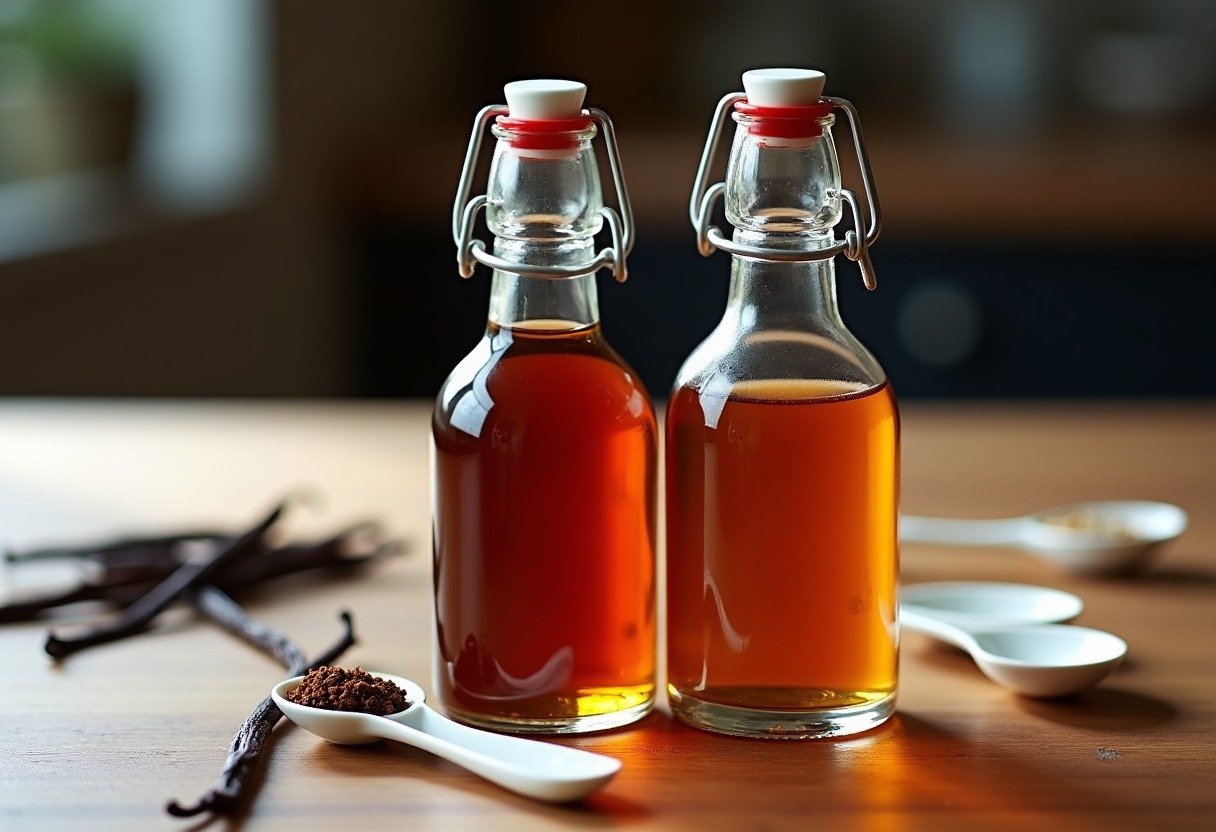
Your vanilla extract sits patiently in its bottle, beans floating in amber liquid, but determining when it's actually ready requires more than watching the calendar. While most extract makers rely solely on time, experienced vanilla enthusiasts know that visual appearance, aroma depth, and flavor balance provide far more reliable indicators of true readiness.
Why Time Alone Doesn't Determine Extract Readiness
Extract maturity depends on multiple variables that time alone cannot predict. Bean quality, alcohol proof, storage temperature, and extraction ratio all influence how quickly vanillin and other flavor compounds leach from the beans. A single Grade A Madagascar bean in high-proof vodka may extract faster than three Grade B beans in lower-proof alcohol, despite identical aging periods.
The FDA defines vanilla extract as containing at least 35% alcohol by volume and 13.35 ounces of vanilla beans per gallon of extracting solution. However, these minimum standards don't account for peak flavor development, which occurs when extraction reaches equilibrium between the beans and alcohol.
Traditional wisdom suggests two months minimum aging, but beans can continue releasing compounds for six months or longer. Understanding the visual and sensory markers of readiness prevents both under-extracted weakness and over-aged harshness that can develop in poorly monitored extracts.
Visual Signs Your Extract Has Matured
Color provides the most immediate readiness indicator. Fresh extract appears pale amber or light brown within the first week. True maturity shows as deep mahogany or dark chocolate brown, similar to strong black coffee. Madagascar vanilla typically develops the darkest color, while Tahitian varieties may remain lighter despite full flavor development.
Bean condition changes dramatically during extraction. Initially plump and oily, properly extracted beans shrivel and wrinkle as their cellular structure breaks down. The beans should feel significantly lighter and more pliable when gently squeezed through the bottle. Beans that remain firm and full after two months indicate insufficient extraction time or inadequate alcohol strength.
Sediment patterns also signal readiness. Early extraction produces minimal settling, but mature extract develops fine particles that create a slight cloudiness when shaken and settle within minutes. This sediment contains concentrated flavor compounds and indicates thorough extraction. Clear extract with no sediment often lacks full flavor development.
The liquid surface reveals extraction progress through foam behavior. Young extract produces no foam when shaken vigorously, while mature extract creates persistent, coffee-colored foam that takes 30-60 seconds to dissipate. This foam density correlates directly with vanillin concentration and overall flavor intensity.
Aroma and Taste Testing for Perfect Maturity
Aroma evaluation requires a systematic approach. Fresh extract smells primarily of alcohol with faint vanilla notes. Ready extract delivers complex vanilla fragrance that overwhelms the alcohol scent when the bottle is opened from arm's length. The aroma should be rich and multi-layered, not sharp or one-dimensional.
Conduct taste tests using a clean spoon to sample small amounts. Young extract tastes harsh and alcoholic with minimal vanilla flavor. Mature extract balances alcohol heat with smooth vanilla richness. The vanilla flavor should linger on your palate for 10-15 seconds after swallowing, not disappear immediately.
| Maturity Stage | Color | Aroma | Taste | Bean Condition | |---|---|---|---|---| | 2-4 weeks | Light amber | Alcohol-forward, faint vanilla | Harsh, little vanilla flavor | Firm, plump | | 6-8 weeks | Medium brown | Balanced alcohol/vanilla | Smooth vanilla, mild alcohol heat | Softening, some wrinkling | | 10-12 weeks | Dark mahogany | Rich vanilla dominates | Full vanilla flavor, alcohol integrated | Significantly shriveled | | 16+ weeks | Deep chocolate brown | Complex, layered vanilla | Intense vanilla, smooth finish | Fully extracted, very soft |
Professional bakers often perform comparison tests against quality commercial extracts. Your homemade extract should match or exceed the vanilla intensity of premium store-bought versions. If your extract tastes weaker than commercial alternatives after three months, extend aging time or increase the bean-to-alcohol ratio in future batches.
Essential Tools for Testing Extract Readiness
Proper testing requires specific equipment for accurate assessment. → Shop glass dropper bottles on Amazon allow precise sampling without contaminating your main batch. These small bottles let you test different stages without opening your primary storage container repeatedly.
A digital kitchen scale proves invaluable for tracking bean weight loss during extraction. Beans typically lose 15-20% of their original weight when fully extracted. Document starting weights and monthly measurements to monitor extraction progress objectively.
→ Shop amber glass bottles on Amazon protect your extract from light degradation during the testing phase. Light exposure can break down vanillin compounds and create off-flavors, especially in clear glass containers.
Quality → Shop fine mesh strainers on Amazon help separate sediment for clarity testing. While sediment indicates good extraction, some bakers prefer cleaner extracts for light-colored batters where dark particles might show.
Temperature monitoring equipment ensures consistent aging conditions. Extract develops most efficiently between 65-75°F in dark storage. Significant temperature fluctuations can slow extraction or create uneven flavor development.
Advanced Techniques Most Extract Makers Miss
Extraction rates vary significantly between different vanilla origins. Madagascar vanilla beans typically reach peak extraction 2-3 weeks faster than Tahitian varieties due to higher vanillin content and different cellular structure. Ugandan beans fall between these extremes, requiring careful monitoring to avoid over-extraction of their naturally intense flavors.
Professional extract makers use specific gravity measurements to track extraction progress. As flavor compounds dissolve into the alcohol, the liquid's density increases measurably. A simple hydrometer designed for spirits can detect these changes, providing objective data beyond sensory evaluation.
Bean splitting techniques dramatically affect extraction speed. Lengthwise splits expose maximum surface area but may over-extract woody or bitter compounds if aged too long. Cross-cutting beans into segments creates more controlled extraction with less risk of harshness but requires longer aging periods for full flavor development.
Double-extraction methods involve replacing spent beans with fresh ones after initial extraction completes. This technique creates exceptionally concentrated extracts but requires precise timing. Add fresh beans only when original beans have fully shriveled and extraction has plateaued, typically after 3-4 months.
Consider alcohol proof adjustments during aging. Starting with higher proof alcohol (50-60%) accelerates initial extraction, but reducing to 35-40% proof halfway through aging can improve final flavor balance. This technique requires experience to execute properly but produces remarkably smooth, complex extracts.
FAQ
How long does vanilla extract need to age before it's ready to use? Most vanilla extracts reach basic usability after 8-10 weeks, but peak flavor development occurs between 12-16 weeks for optimal results. However, aging time depends heavily on bean quality, alcohol strength, and storage conditions. Madagascar vanilla beans typically extract faster than Tahitian varieties, while higher proof alcohol accelerates the process. The best indicator isn't time but the visual and taste cues: deep mahogany color, rich vanilla aroma that dominates alcohol scent, and smooth flavor balance when tasted.
Can vanilla extract be over-aged or left too long? Vanilla extract can develop harsh or bitter notes if aged excessively, particularly beyond 12 months with the original beans still present. Over-aged extract often tastes woody or astringent rather than smooth and vanilla-forward. The beans themselves can start breaking down and releasing undesirable tannins after extended contact. Most extract makers achieve optimal results by removing or straining out the original beans after 6-8 months, then allowing the liquid to continue mellowing for another 2-4 months. This prevents over-extraction while maintaining the desired vanilla intensity.
Why does my homemade vanilla extract taste weaker than store-bought versions? Weak homemade extract usually results from insufficient bean-to-alcohol ratios, low-quality beans, or inadequate aging time. Commercial extracts often use concentrated vanilla oleoresins and artificial vanillin to boost intensity beyond what pure vanilla beans can achieve naturally. Check your recipe against the standard ratio of 6-8 Grade A beans per cup of alcohol, ensure you're using quality vanilla beans for extract, and verify your alcohol is at least 35% proof. Properly made homemade extract should match commercial intensity after 12-16 weeks of aging.
What should I do if my vanilla extract develops cloudy sediment? Light cloudiness and fine sediment indicate normal, healthy extraction as vanilla compounds dissolve into the alcohol solution. This sediment contains concentrated flavor compounds and actually signals good extraction progress. However, chunky particles, mold growth, or strong off-odors indicate contamination and the batch should be discarded. Clear the sediment by letting the extract settle undisturbed for 24 hours, then decanting the clear liquid through → Shop vanilla extract labels on Amazon or straining if desired. Most bakers leave beneficial sediment in place as it continues contributing flavor.
How can I speed up the vanilla extract aging process safely? Several techniques can accelerate extraction without compromising quality: splitting beans lengthwise to expose maximum surface area, using higher proof alcohol (50-60%) initially, maintaining consistent storage temperature between 65-75°F, and gently agitating the bottle weekly. Avoid heat-based acceleration methods like warm water baths or direct sunlight, as these can break down delicate flavor compounds and create harsh notes. The fastest safe approach combines split Grade A Madagascar beans with quality vodka at proper ratios, stored in dark conditions with regular gentle mixing. This typically reduces aging time from 16 weeks to 10-12 weeks while maintaining full flavor development.
Perfect vanilla extract reveals itself through deep color, complex aroma, and flavor balance that develops only through patient observation of these natural indicators.
Some links on this page are affiliate links. We may earn a small commission if you purchase through them, at no extra cost to you.
As an Amazon Associate we earn from qualifying purchases. This article contains affiliate links; if you buy through them we may earn a small commission at no additional cost to you.