
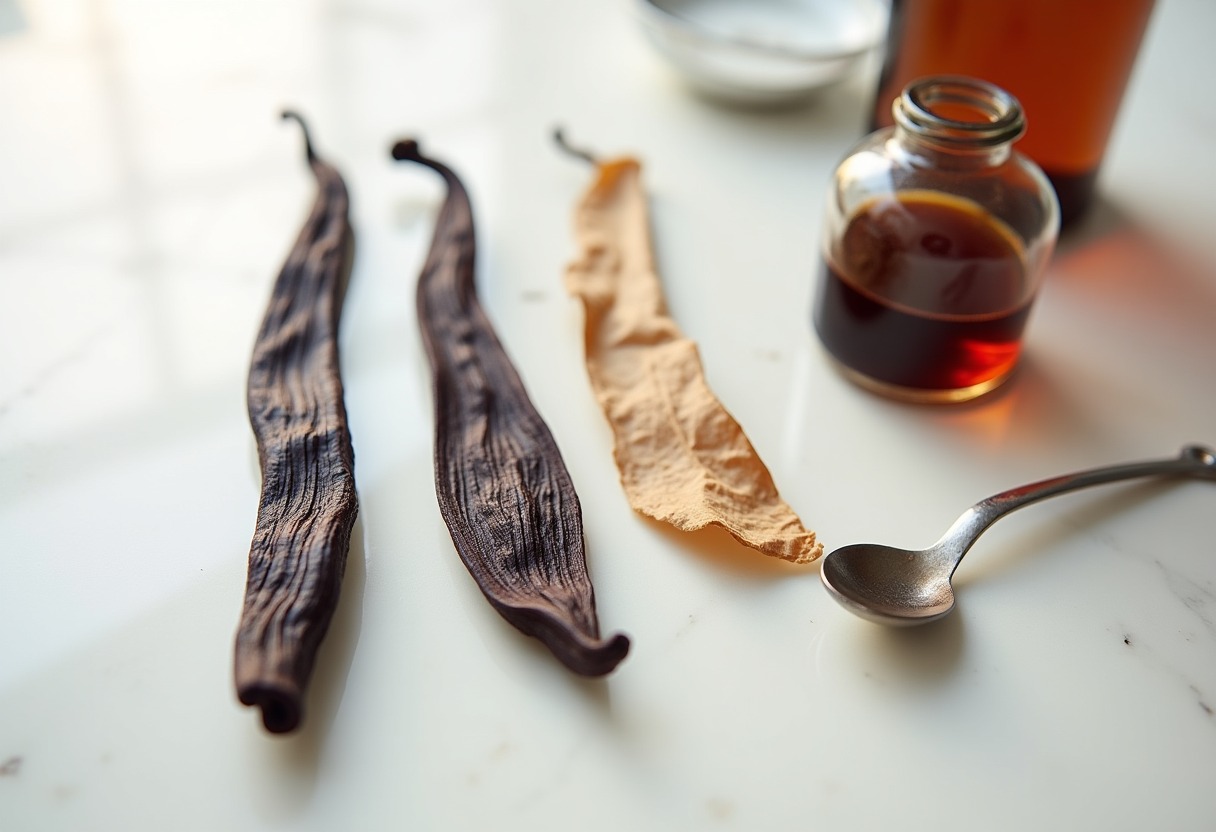
Your vanilla beans sit in that amber bottle, darker and more wrinkled than when you started. The extract tastes good, but you've been topping off the alcohol for six months, and you wonder if those beans still contribute anything or if they're just taking up space.
Why Vanilla Beans Eventually Stop Contributing Flavor
Vanilla beans contain approximately 250 flavor compounds, primarily vanillin, which make up the characteristic vanilla profile. According to the FDA's vanilla extract standards, commercial extract must contain 13.35 ounces of vanilla beans per gallon of alcohol to meet the minimum flavor threshold. The extraction process pulls these compounds from the bean caviar and pod walls into the alcohol over time.
Each bean holds a finite amount of extractable material. Once alcohol has drawn out most of these compounds, continued soaking yields diminishing returns. The beans don't spoil in alcohol—they just run dry. Understanding the signs of depletion helps you maintain extract quality and avoid wasting beans that could still produce flavor in a fresh batch.
Five Clear Signs Your Vanilla Beans Are Spent
Complete color loss in the pods. Fresh beans in extract maintain a dark brown to black appearance for months. Exhausted beans turn a pale tan or grayish-brown, similar to wet driftwood. This color change indicates that the water-soluble pigments and flavor compounds have migrated into the alcohol. If your beans look bleached, they've given most of what they had.
No visible caviar remaining. Split a spent bean lengthwise with a knife. If the interior shows only stringy fibers with no seed paste clinging to the walls, extraction is complete. Fresh beans retain sticky black caviar even after months in alcohol. The caviar holds concentrated vanillin and other aromatics—once it's gone, the bean contributes minimal flavor.
Brittle, papery texture. Remove a bean and pinch it between your fingers. Exhausted beans feel stiff and break easily, like dried autumn leaves. Beans with remaining potency stay pliable and slightly rubbery from residual moisture and oils. The textural shift happens as alcohol strips out the glycosides and natural oils that keep bean tissue supple.
Weak smell test failure. Pull a bean from the extract, pat it dry, and smell it directly. A potent bean releases rich, complex vanilla aroma even after months in alcohol. Spent beans smell faintly alcoholic with barely perceptible vanilla notes. Your nose is more sensitive to vanillin than your taste buds—if you can't smell it strongly on the bean itself, the extract won't improve with more time.
Extract stops darkening. Track your extract color over time. Active beans continue deepening the liquid from amber to dark brown as vanillin concentration increases. When beans are exhausted, the color plateaus. If you've been maintaining your batch for four to six months and see no color change in the past month, extraction has likely peaked.
Visual and Sensory Timeline for Bean Depletion
| Timeframe | Bean Appearance | Extract Color | Potency Status | |-----------|-----------------|---------------|----------------| | 0-2 months | Dark brown-black, plump, strong vanilla scent | Light amber to golden | Building strength, beans active | | 3-6 months | Brown, slightly wrinkled, moderate scent | Medium to dark brown | Peak extraction window, optimal potency | | 7-12 months | Pale brown, very wrinkled, faint scent | Dark brown (stable) | Declining returns, consider replacement | | 12+ months | Tan-gray, brittle, minimal scent | Dark brown (no change) | Exhausted, replace beans |
This timeline assumes a standard ratio of 5-6 beans per cup of alcohol and regular agitation. Batches with higher bean counts extract faster and may show earlier depletion signs.
Testing Bean Potency with the Comparison Method
The most reliable way to assess bean exhaustion is a side-by-side comparison. Prepare a small test batch using the same alcohol type and ratio as your main extract. Use fresh beans from the same origin—Madagascar, Tahitian, or Mexican—to match the flavor profile of your aging batch.
After four weeks, compare the test batch to your existing extract. Smell both bottles, then taste a quarter-teaspoon of each on a neutral spoon. Fresh beans produce a noticeably brighter, more complex aroma with distinct floral or woody notes depending on origin. Exhausted beans yield extract that tastes flat or one-dimensional, lacking the aromatic top notes that vanillin alone can't provide.
Measure color intensity by pouring equal amounts into clear glass cups against a white background. Extract from spent beans appears watery or translucent compared to the rich opacity of fresh-bean extract at the same age. This visual difference confirms diminished vanillin concentration.
For precision, use a refractometer to measure Brix levels (sugar content). While vanilla extract contains minimal sugar, the dissolved solids from beans register on these tools. Fresh beans yield higher readings than spent ones. This method works best for extract makers who track batches scientifically, but sensory testing catches what instruments miss.
What to Buy for Testing and Replacement
When your beans show depletion signs, replace them with quality pods that match your extraction goals. → Shop grade A vanilla beans on Amazon for plump, moist beans with high vanillin content. Grade A beans work well for both new batches and replenishing existing extract, as covered in Grade A Vs Grade B Vanilla Beans.
Store replacement beans properly until use. → Shop bean storage tubes on Amazon to maintain moisture and prevent premature drying. Vacuum-sealed tubes preserve bean quality for months, protecting your investment while you finish using spent beans in other applications.
Refresh your extract in quality containers. → Shop amber glass extract bottles on Amazon to protect vanillin from UV degradation. Transfer strained extract to clean bottles when adding fresh beans, as detailed in Best Glass Bottles Vanilla Extract Storage.
For bulk extract production, buy beans in larger quantities. → Shop vanilla bean pods bulk on Amazon for better per-bean pricing on 20-bean packs or more. Bulk purchasing makes sense when you rotate beans every six months in active extract batches.
Use funnels to transfer extract cleanly during bean replacement. → Shop vanilla extract funnels on Amazon to avoid waste when straining or rebottling. Stainless steel funnels with fine mesh catch bean fragments while preserving every drop of extract.
The Double-Extract Method for Maximum Bean Use
Most extract makers throw away beans after one extraction cycle, but those pods retain 15-20% of their original flavor compounds even after appearing spent. The double-fold technique captures this residual value.
Remove your first-cycle beans when they show three or more exhaustion signs. Place them in a clean jar with fresh alcohol at a 1:1 ratio by volume—four ounces of beans to four ounces of vodka or bourbon. This concentrated second extraction pulls the remaining compounds over 8-12 weeks. The resulting extract tastes milder than first-cycle product but works well in baked goods where vanilla is a supporting note rather than the star.
Alternatively, add spent beans to a fresh batch alongside new beans. The old pods contribute subtle depth while new beans provide primary flavor. This approach, detailed in Double Extract Vanilla Beans, extends bean value without creating a weak secondary product. Use a 2:1 ratio of new to spent beans for balanced results.
The double-extract method works best with beans that haven't been in extract longer than eight months. Beans aged past twelve months have truly exhausted their flavor compounds and yield negligible returns in a second cycle. At that point, repurpose them for vanilla sugar or compost them.
Beyond Extract: Using Spent Beans Productively
Exhausted beans still hold value outside the extract bottle. Rinse and dry spent pods, then bury them in granulated sugar for vanilla sugar. The residual vanillin and aromatic oils perfume the sugar over two weeks, creating a baking staple that costs nothing extra. This technique appears in Vanilla Sugar Powder Pantry Staples with ratio guidance.
Grind dried spent beans into powder using a spice grinder. The powder adds visual vanilla specks to batters and icings without altering flavor significantly—perfect for cookies and cakes where appearance matters. Blend the powder with cocoa or cinnamon for custom spice mixes.
Simmer spent beans in milk or cream for custards and puddings. Heat activates the trace compounds remaining in the pods, releasing enough flavor for dairy-based desserts. One spent bean per two cups of milk provides noticeable vanilla notes without wasting fresh beans on applications that don't require peak potency.
Add dried spent beans to homemade potpourri or sachets. The pods retain enough scent to freshen drawers or closets for several months. This use recovers the last traces of value from beans that have already paid for themselves through extract production.
FAQ
How long do vanilla beans last in extract before losing potency? Beans maintain peak potency for 6-8 months in extract under normal conditions—one bean per ounce of alcohol, stored in a cool dark place with weekly shaking. After eight months, extraction rate slows dramatically as vanillin concentration plateaus. Some extract makers keep beans in solution for years, but those beans contribute negligible additional flavor past the one-year mark. The alcohol preserves the pods indefinitely, but preservation doesn't equal ongoing extraction.
Can I tell if beans are exhausted just by tasting the extract? Taste alone is unreliable because extract continues to taste strong even after beans stop contributing new flavor. The alcohol retains dissolved vanillin and other compounds regardless of bean condition. You're tasting accumulated flavor, not active extraction. Combine taste testing with visual inspection—check bean color, texture, and caviar presence. If extract tastes good but beans look bleached and brittle, they're spent. The liquid quality reflects past extraction, not current bean activity.
Do different vanilla bean origins exhaust at different rates? Yes, bean origin significantly affects depletion timing. Tahitian beans, which average 1.4-1.9% vanillin content, exhaust faster than Madagascar beans at 2.0-2.9% vanillin. Mexican beans fall between these ranges. Tahitian pods also have thinner walls and softer tissue, allowing alcohol to penetrate faster. You'll see exhaustion signs in Tahitian beans at 4-5 months versus 6-8 months for Madagascar beans at identical ratios. Origin comparisons in Madagascar Vs Tahitian Vanilla Beans explain these vanillin differences in detail.
Should I remove exhausted beans or leave them in the extract? Remove exhausted beans once they show three or more depletion signs. Leaving spent beans in extract serves no purpose—they've released their extractable compounds and won't contribute additional flavor regardless of soak time. The pods also occupy space that fresh beans could use. Remove old beans, strain the extract if sediment has accumulated, and add fresh pods at the standard ratio found in How Many Vanilla Beans Per Cup Of Vodka. This rotation maintains consistent extract strength over time.
Can I speed up extraction to avoid waiting months for new beans? You can accelerate initial extraction through several techniques, but true depth requires time. Splitting beans lengthwise exposes more surface area, increasing extraction speed by 30-40% compared to whole beans. Gentle heat—placing sealed bottles in a warm water bath at 90-100°F for 30 minutes weekly—mobilizes vanillin molecules faster. Despite these methods, complex flavor development needs at least eight weeks as secondary compounds extract at different rates than vanillin. Methods for optimal timing appear in Vanilla Extract Aging Time. Rushed extract tastes one-dimensional compared to properly aged product.
Extract quality depends on recognizing when beans have given all they can and knowing when fresh pods will serve you better.
Some links on this page are affiliate links. We may earn a small commission if you purchase through them, at no extra cost to you.
As an Amazon Associate we earn from qualifying purchases. This article contains affiliate links; if you buy through them we may earn a small commission at no additional cost to you.