
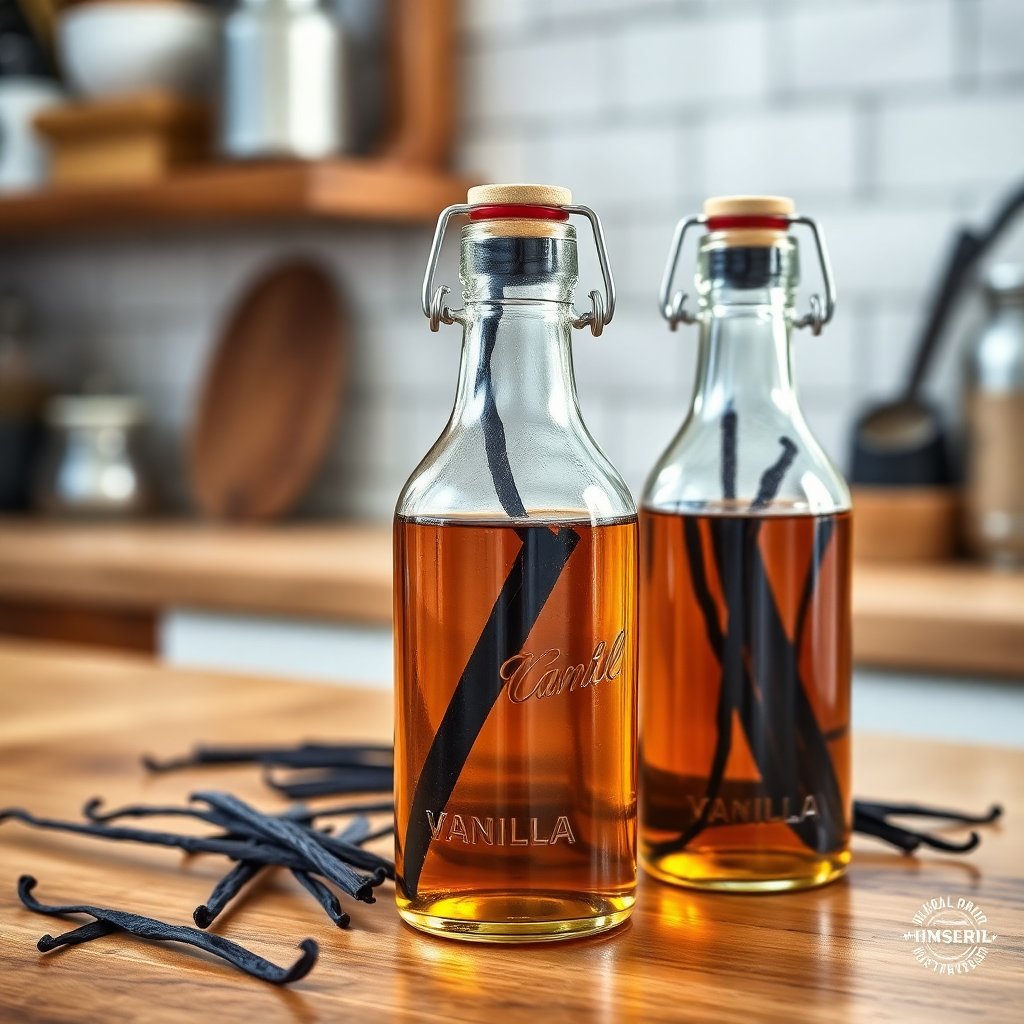
Counting backward from Christmas, the math is suddenly uncomfortable. A standard cold-steep vanilla extract wants a full eight weeks to be genuinely good, and starting today — the third week of October — leaves barely nine weeks before the gifts need wrapping. That's doable for a cold batch, but with zero margin for error and no time to let it mellow the way it should. If you're reading this having just remembered that homemade vanilla was on your list, the honest fix is to stop steeping cold and start steeping warm.
Heat accelerates extraction. The vanillin and the hundreds of secondary aroma compounds locked inside the bean dissolve into alcohol faster when the solution is warm, which is why a gently heated batch can reach a usable, gift-worthy state in days rather than months. The trade-off is control: too much heat, or heat applied carelessly, flashes off the delicate top notes and can leave a flat, one-dimensional result. Done right, warm extraction is the single best tool for a late start.
As an Amazon Associate we earn from qualifying purchases at no extra cost to you. Links below are affiliate search links.
Why warm steeping works (and where it goes wrong)
Extraction is just diffusion. Flavor molecules migrate from a high concentration inside the bean to a lower concentration in the surrounding alcohol until things even out. Two levers speed that up: surface area (splitting and chopping the beans) and temperature (warming the solution). Cold steeping relies on time alone to do what heat can do in an afternoon.
The reason the classic method still says "wait two months" is that gentle, slow extraction pulls a fuller spectrum of compounds and lets harsh alcohol edges round off. When you rush with heat, you're trading some of that rounding for speed. The goal of a fast batch is not to replicate a six-month-aged extract — it's to get something clean, fragrant, and clearly homemade onto the table in time.
Where fast methods go wrong is almost always too much heat. Push the temperature up near a simmer and you boil off aromatics and scorch the sugars, producing a stewed, prune-like note instead of bright vanilla. The sweet spot is warm, not hot: low enough that the alcohol stays in the jar, high enough to move things along.
Method 1: Sous vide — the most reliable fast route
A sous vide immersion circulator is the best tool for this because it holds a precise, low temperature for hours without you babysitting it. That precision is exactly what keeps a fast batch from turning muddy.
What you need:
- An immersion circulator. Any basic model works; you're holding a gentle temperature, not searing. Shop sous vide immersion circulators on Amazon
- Grade B vanilla beans, which are drier and more concentrated and the traditional choice for extract. Shop grade B vanilla beans in bulk on Amazon
- A heatproof canning jar with a two-piece lid, and 80-proof vodka or bourbon.
The steps:
- Split and chop the beans. For a fast batch, don't just split lengthwise — cut the pods into short pieces to maximize surface area. Use the standard ratio of roughly one ounce of beans (about six to eight beans) per cup of alcohol.
- Add beans and alcohol to the jar, then seal the lid finger-tight only — snug enough to keep water out, loose enough that any pressure can escape. Never seal a jar airtight for heated extraction.
- Set the circulator to 135°F (57°C) and submerge the jar so the water line sits above the liquid inside. Clip it to the side of the pot so it doesn't tip.
- Hold for 2 to 3 hours. You'll watch the liquid darken from clear to amber to deep brown over that window.
- Lift the jar out, let it cool to room temperature, and taste. It should smell unmistakably of vanilla.
Keeping the temperature under 140°F is the part that matters. That's comfortably below alcohol's boiling point and gentle enough to protect the aromatics while still cutting months off the timeline. If the result is a touch sharp, a few extra days resting in a cupboard will soften it further — and you have the time for that now.
For a deeper look at how curing time maps to flavor, our guide on vanilla extract aging time breaks down what changes week by week, which helps you judge how far a fast batch has to go.
Method 2: The oven or slow-cooker warm steep (no circulator needed)
No sous vide? A warm-steep gets you most of the way there with gear you already own. It's less precise, so you trade a little consistency for not buying a new gadget.
Oven method: Set your oven to its lowest setting — often around 170°F — place the loosely capped jar in a water bath inside a baking dish, and turn the oven off once it reaches temperature. Let the jar sit in the cooling oven for a few hours, then repeat the warm-and-cool cycle over a day or two. The residual heat does the work without ever running hot.
Slow-cooker method: Set a slow cooker to "warm" (not low or high), set the jars in a water bath inside the crock, and hold for three to four hours, checking that the water never approaches a simmer. A cheap probe thermometer clipped to the pot keeps you honest — you want the water around 130 to 140°F.
Either way, the color tells the story. A proper warm steep moves from clear to rich brown in hours, and the smell shifts from raw alcohol to warm, rounded vanilla. If it still smells boozy, give it more warm time rather than more heat.
Do not microwave the jar. Microwaves heat unevenly, create hot spots that scorch, and — with alcohol involved — are simply a bad idea. Low and slow beats fast and hot every time.
How strong will a fast batch actually be?
Honest expectations matter here. A two-to-three-hour sous vide batch comes out roughly in the range of a young cold-steep that's had a month or more — fragrant and clearly vanilla, but not yet as deep and complex as a long-aged extract. That's completely fine for baking, and most people can't tell a fast batch from a slow one once it's folded into cookie dough or a frosting.
For reference on what the finished benchmark looks like, the U.S. Food and Drug Administration's standard of identity for vanilla extract defines single-fold extract by a minimum bean quantity and at least 35 percent alcohol by volume. Using 80-proof spirits (40 percent) and the standard one-ounce-per-cup bean ratio keeps a homemade batch comfortably in that territory, fast or slow.
If you want to push strength up quickly, lean on more beans rather than more heat. Bumping to a double-fold ratio — twice the beans per cup — gives a fast batch extra punch and helps compensate for the shorter extraction. Not sure how to count beans against your liquid volume? Our breakdown of how many vanilla beans per cup covers single- and double-fold math so you can scale a rush batch confidently.
Bottling and the gift timeline from here
Once your fast batch tastes right, strain out any loose seeds if you like a cleaner pour (or leave the pods in for presentation), funnel it into bottles, and label it. Amber glass protects the extract from light and looks the part on a gift shelf.
- Shop amber glass bottles for vanilla extract on Amazon
- A small funnel set keeps the transfer tidy. Shop small kitchen funnels on Amazon
Here's the schedule that works from today's mid-October start:
- This weekend: run a sous vide or warm-steep batch. You'll have usable extract the same day.
- Late October into November: let the bottled extract rest in a cupboard. Even a week of cold rest after warm extraction smooths the edges noticeably.
- Early-to-mid December: final bottling, labels, ribbon, and gift assembly.
That rest step is where a fast batch quietly catches up to a slow one. Warm extraction front-loads the heavy lifting; a few quiet weeks afterward let the flavor settle. To judge whether a batch has arrived, our notes on when vanilla extract is ready give you concrete smell-and-taste checkpoints instead of guesswork.
The shortcuts that are not worth taking
A few popular "hacks" do more harm than good:
- Boiling the beans. It extracts fast but scorches the aromatics and drives off the alcohol you need as a preservative. The result tastes cooked.
- Vanilla paste or bean powder stirred into vodka. That makes a flavored liquid, not a true extract, and it won't keep or behave like the real thing in recipes.
- Shaking it constantly expecting miracles. Agitation helps a little, but it can't substitute for heat or time. A warm batch left still will beat a cold batch shaken daily.
One tool that genuinely helps a rush job is a small kitchen scale, so your bean-to-alcohol ratio is right the first time instead of eyeballed. Shop digital kitchen scales on Amazon
The bottom line
Missing the eight-week window is not the end of your gifting plans — it just means switching from the calendar to the thermometer. A sous vide held at 135°F for a couple of hours, or a patient warm-steep in a cooling oven, gets you clean, fragrant, unmistakably homemade vanilla in a single afternoon, with weeks left over to let it rest and soften before Christmas.
If this is your first batch of any kind, start with the fundamentals in our complete walkthrough of how to make vanilla extract at home, then apply the heat trick above to beat the clock. Keep the temperature gentle, use enough beans, give it a week of quiet rest once it's bottled, and nobody at the table will guess you started in the third week of October.
As an Amazon Associate we earn from qualifying purchases. This article contains affiliate links; if you buy through them we may earn a small commission at no additional cost to you.