
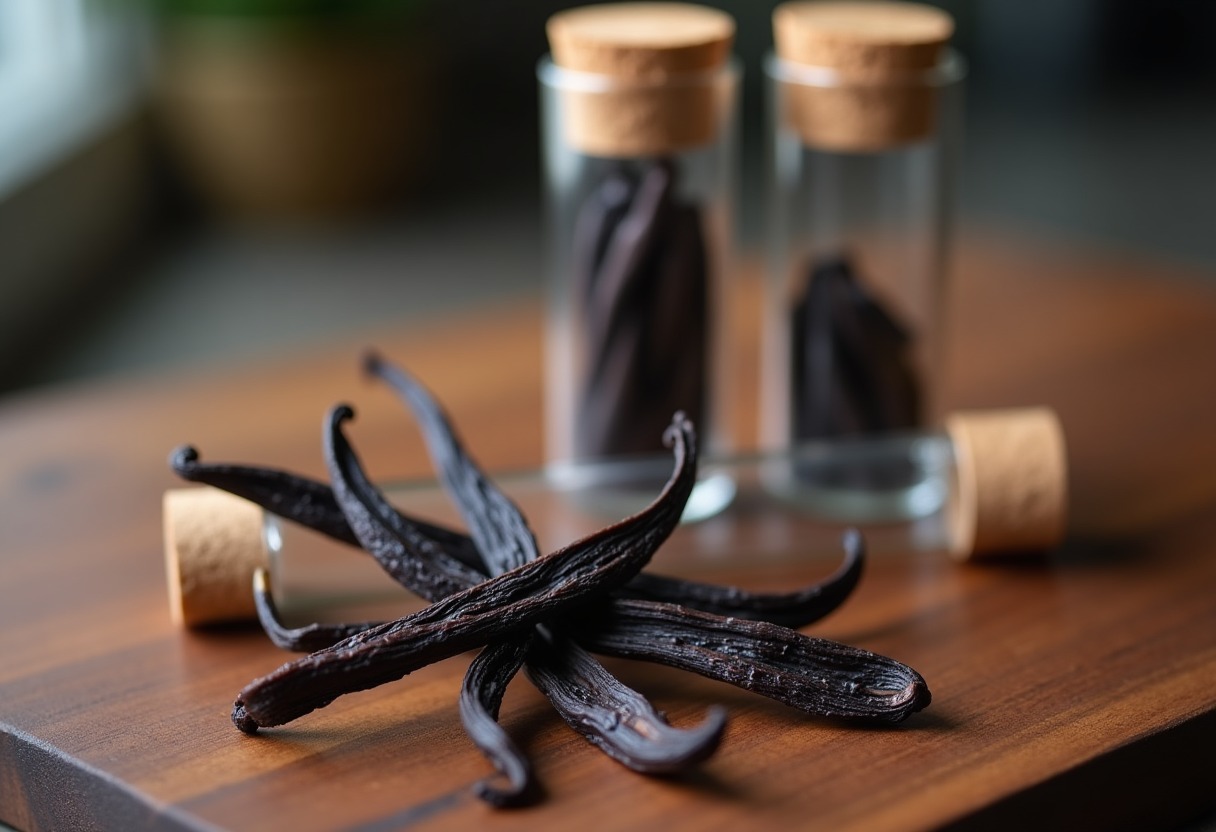
Vanilla beans lose moisture at about 2-3% per month in standard kitchen conditions, turning supple extract-ready pods into brittle sticks that surrender half their vanillin content within six months. Proper long-term storage stops this degradation entirely, preserving the 18-25% moisture content that makes quality beans work for extract.
Why Vanilla Beans Degrade Without Proper Storage
Vanilla planifolia pods contain over 200 flavor compounds suspended in cellular moisture. When that moisture drops below 15%, vanillin crystals begin to lock into the bean's fiber structure rather than dissolving readily into alcohol during extraction. You'll see this as white frosting on the bean's surface — a sign of vanillin migration, not quality improvement.
Temperature fluctuations accelerate this process. Every 10°F increase in storage temperature roughly doubles the rate of enzymatic degradation and moisture loss. A bean stored at 75°F loses moisture twice as fast as one held at 65°F. Light exposure adds another variable: UV radiation breaks down vanillin into vanillic acid, reducing aromatic complexity.
Oxygen exposure matters less than most sellers claim, but it still affects long-term stability. Beans stored in high-oxygen environments for 12+ months develop off-notes described as "musty" or "haylike" as volatile compounds oxidize. This becomes noticeable in finished extract around the six-month aging mark.
The goal when storing vanilla beans long term isn't preservation for its own sake — you're maintaining the exact moisture and compound profile that makes beans dissolve predictably into alcohol when you're ready to start your How To Make Homemade Vanilla Extract batch.
Best Methods to Keep Vanilla Beans Fresh
Vacuum sealing eliminates 99.9% of oxygen exposure and creates a moisture barrier that extends bean life from 6-12 months to 2-3 years. Use → Shop vacuum seal bags on Amazon specifically designed for food storage — not generic plastic bags with hand pumps. Real vacuum sealers pull air to less than 1% of atmospheric pressure.
Store 4-6 beans per bag for batch-sized portions. Label each bag with bean origin, grade, and seal date. When you're comparing Best Bourbon Vanilla Beans 2026 or weighing Madagascar Vs Tahitian Vanilla Beans, proper labeling lets you rotate stock and use older beans first.
Airtight glass containers work for beans you'll use within 6-9 months. → Shop airtight spice jars on Amazon with silicone-sealed lids create adequate barriers for medium-term storage. Glass test tubes with cork stoppers — → Shop glass test tubes with corks on Amazon — work brilliantly for single-bean storage, letting you organize by origin or extract project.
Mylar bags offer a middle ground between vacuum sealing and glass jars. → Shop mylar bags food storage on Amazon blocks light and moisture more effectively than clear containers while staying more affordable than vacuum systems. Add oxygen absorbers to mylar bags for beans you won't touch for 12+ months.
Temperature control beats container choice for beans stored beyond one year. A consistent 60-65°F in a dark pantry or drawer preserves beans better than expensive containers in fluctuating kitchen heat. Basement storage works if humidity stays below 60% — higher moisture encourages mold on bean surfaces.
Storage Method Performance Comparison
| Storage Method | Shelf Life | Moisture Retention | Light Protection | Cost per 10 Beans | |----------------|------------|-------------------|------------------|-------------------| | Vacuum sealed bags | 24-36 months | 95-98% at 24 months | Excellent (opaque bags) | $2-3 (requires sealer) | | Glass jars (airtight) | 6-9 months | 85-90% at 6 months | Poor to fair (depends on storage) | $1-2 | | Mylar bags + O2 absorbers | 18-24 months | 90-95% at 18 months | Excellent | $0.50-1 | | Original plastic tubes | 3-6 months | 70-80% at 6 months | Fair | $0 (included) |
The vacuum-sealed option requires a → Shop vacuum sealer machine on Amazon, adding $40-120 to upfront costs. That investment pays off if you buy beans in bulk — 1-2 pounds at a time — and portion them for extract batches over 18-24 months. For smaller quantities (under half a pound), mylar bags deliver 80% of the preservation benefits at one-tenth the cost.
Glass jars make sense for active extract makers working through beans within a quarter. If you're following the ratios in How Many Vanilla Beans Per Cup Of Vodka and making fresh batches every 8-12 weeks, airtight jars let you see and access beans without breaking vacuum seals repeatedly.
Common Storage Mistakes That Ruin Beans
Refrigeration creates more problems than it solves. Temperatures below 50°F slow moisture loss but introduce condensation risk every time you remove beans to room temperature. Water droplets on bean surfaces promote mold growth within 48-72 hours. One moldy bean contaminates an entire storage container through spore transfer.
Freezing vanilla beans — a frequently searched preservation method — damages cellular structure through ice crystal formation. Thawed beans release moisture unevenly, creating soggy sections that resist alcohol penetration during extraction. You'll end up with beans that look intact but extract 30-40% less efficiently than properly stored room-temperature pods. The only exception: beans you plan to use immediately for Vanilla Sugar Powder Pantry Staples where cellular damage doesn't affect outcome.
Storing different bean origins together transfers aromatic compounds. Tahitian beans stored with Mexican varieties pick up the Mexican spice notes within 3-4 months. Keep origins separated if you care about maintaining distinct flavor profiles for different extract batches. This matters most when you're testing Mexican Vanilla Beans Vs Madagascar side by side.
Over-drying beans before storage accelerates vanillin crystallization. Some guides recommend air-drying beans for 24 hours to prevent mold, but this drops moisture content below the 20-25% ideal for extract. Beans at 15% moisture work for baking but extract sluggishly. Check bean flexibility — they should bend without cracking. Stiff beans have already lost too much moisture.
Buying beans in quantities larger than you'll use in 18 months guarantees waste unless you have proper vacuum sealing equipment. A pound of beans (roughly 80-100 pods depending on grade) makes 12-16 cups of double-strength extract. If that's more than you'll bottle in two years, you're storing beans past their prime regardless of method. Consider your actual usage before bulk buying, even when per-bean prices drop significantly at higher volumes.
Advanced Preservation Techniques Most Guides Skip
Moisture content testing gives you objective data on bean condition. Professional vanilla processors target 18-22% moisture for cured beans. You can approximate this at home: weigh 5 beans, dry them completely in a 200°F oven for 90 minutes, then weigh again. The weight difference divided by original weight gives moisture percentage. Beans below 15% won't extract efficiently. Above 30% invites mold.
Partial vacuum sealing works for beans you access frequently. Seal beans in portions of 10-15, pull one bag monthly for active extract projects, and keep the remainder sealed. This prevents the moisture loss that happens when you open and close a single large container repeatedly. Each exposure to room air costs you 0.5-1% moisture content.
Humidity control packs — the same silica gel or two-way humidity regulators used for cigars — stabilize moisture in glass containers. Add a 62% humidity pack to a jar holding 20-30 beans. The pack prevents both over-drying and excess moisture accumulation. Replace packs every 6-9 months. This technique extends glass jar storage from 6-9 months to 12-15 months without vacuum sealing.
Rotation dating prevents storage of beans past their useful life. Mark each container with purchase date and projected use date (12 months for glass, 24 months for vacuum seal). Use the oldest beans first when starting new extract batches. This first-in-first-out system ensures you're always working with beans at peak condition. When you're comparing Grade A Vs Grade B Vanilla Beans for storage, Grade B's lower moisture content (15-20% vs 20-25%) actually extends vacuum-sealed shelf life by 3-6 months.
Creating a storage log tracks which methods work for your specific environment. Record bean origin, storage method, start date, and monthly flexibility checks. After 6-12 months, you'll see patterns in how your kitchen conditions affect different storage approaches. A basement in Florida requires different strategies than a pantry in Colorado — humidity and temperature matter more than any single container type.
FAQ
How long do vacuum-sealed vanilla beans last? Vacuum-sealed vanilla beans maintain extract-quality moisture and flavor for 24-36 months when stored at 60-65°F in darkness. Beans sealed at optimal moisture content (20-25%) lose less than 2-3% moisture annually in proper vacuum conditions. Beyond 36 months, vanillin compounds begin to crystallize even in sealed environments, reducing extraction efficiency by 15-20%. Check beans at the 24-month mark — if they're still pliable and aromatic, they'll work for extract, but plan to use them within 6 months of opening the seal.
Should I refrigerate or freeze vanilla beans for long-term storage? Neither refrigeration nor freezing improves vanilla bean storage — both create more problems than they solve. Refrigerator temperatures (35-40°F) slow moisture loss but introduce condensation every time beans return to room temperature, promoting mold growth within 48-72 hours. Freezing damages cellular structure through ice crystal formation, causing beans to release moisture unevenly when thawed and reducing extraction efficiency by 30-40%. Room temperature storage at 60-65°F in vacuum-sealed or airtight containers preserves beans better than any cold storage method while maintaining the supple texture needed for Split Vanilla Beans Extract preparation.
What's the best container for storing vanilla beans if I don't have a vacuum sealer? Mylar bags with oxygen absorbers deliver the best results without vacuum sealing equipment, maintaining 90-95% moisture retention for 18-24 months at roughly $0.50-1 per 10 beans. The combination blocks light completely and removes oxygen without requiring expensive machinery. For beans you'll use within 6-9 months, airtight glass jars with silicone-sealed lids work well and let you visually inspect bean condition. Add a 62% humidity control pack to glass jars to extend storage to 12-15 months. Skip plastic bags or tubes that came with beans — they're designed for shipping, not long-term storage, and typically maintain only 70-80% moisture over 6 months.
Can you store different vanilla bean varieties together? Storing different vanilla bean origins together causes aromatic compound transfer within 3-4 months, particularly between strongly flavored varieties like Tahitian and Mexican beans. Tahitian beans stored with Madagascar pods pick up the Madagascar's creamy-sweet notes while losing their characteristic floral-fruity profile. This matters most if you're making origin-specific extracts to highlight distinct flavor profiles discussed in Ugandan Vanilla Beans Review 2026 or similar comparisons. Store each origin separately in labeled containers, or accept that mixed storage will create hybrid flavor profiles suitable for general-purpose extract but not precision baking applications.
How can you tell if stored vanilla beans have gone bad? Bad vanilla beans show obvious visual and textural signs: white or green mold growth on surfaces, complete brittleness that causes beans to snap rather than bend, or off-odors described as musty, sour, or fermented rather than sweet-aromatic. Vanillin frosting — white crystals on the outside of beans — indicates moisture loss and compound migration but doesn't mean beans are unusable, just that they'll extract more slowly. Beans that have lost moisture below 15% feel stiff and papery but will still produce extract, though you may need to extend extraction time by 2-3 months beyond normal aging periods covered in Vanilla Extract Aging Time. Moldy beans should be discarded immediately as mold spores contaminate entire batches.
Store Your Beans Right, Extract Better
Proper vanilla bean storage isn't optional prep work — it's the difference between beans that extract clean and full in four months versus pods that take eight months to produce weak, incomplete flavor.
Some links on this page are affiliate links. We may earn a small commission if you purchase through them, at no extra cost to you.
As an Amazon Associate we earn from qualifying purchases. This article contains affiliate links; if you buy through them we may earn a small commission at no additional cost to you.