Gin's botanical complexity — juniper berries, coriander, citrus peel, angelica root — creates vanilla extract with layered flavor that vodka can't match. The question isn't whether to use gin, but which gin profile pairs with which vanilla bean origin.
Why Gin Creates Different Vanilla Extract
Most home extractors default to vodka because it's neutral. That neutrality preserves vanilla's pure flavor, but it also leaves opportunity on the table. Gin contributes a botanical backbone that can either complement or clash with vanilla's natural compounds.
Vanilla contains over 200 flavor compounds beyond vanillin — the dominant molecule in commercial extracts. When you infuse vanilla beans in gin rather than neutral spirits, those compounds interact with the gin's botanicals. Juniper's pine-like terpenes play against vanilla's woody lignin notes. Citrus oils from lemon or orange peel brighten vanilla's natural fruit esters. Spice botanicals like cardamom or grains of paradise echo vanilla's own phenolic complexity.
The result is extract that tastes distinctly different from vodka-based versions — not better or worse, just more layered. In baked goods, gin vanilla extract adds dimension that reads as "something special" without tasting like gin. The alcohol cooks off, but the botanical imprint remains.
The trade-off: gin vanilla extract works brilliantly in some applications and poorly in others. Understanding which beans pair with which gin styles prevents waste and disappointment.
The Gin Vanilla Extract Recipe
Use the same bean-to-alcohol ratio as traditional vanilla extract: 1 ounce of beans (about 5-6 grade A beans) per 8 ounces of gin. The FDA requires vanilla extract to contain 13.35 ounces of beans per gallon and be at least 35% alcohol — gin exceeds that threshold at 40-47% ABV.
Basic method:
- Split 5-6 vanilla beans lengthwise, leaving one end intact
- Cut beans to fit your bottle (4-6 inch pieces work in most → Shop swing top bottles 8 oz on Amazon)
- Add beans to clean glass bottle
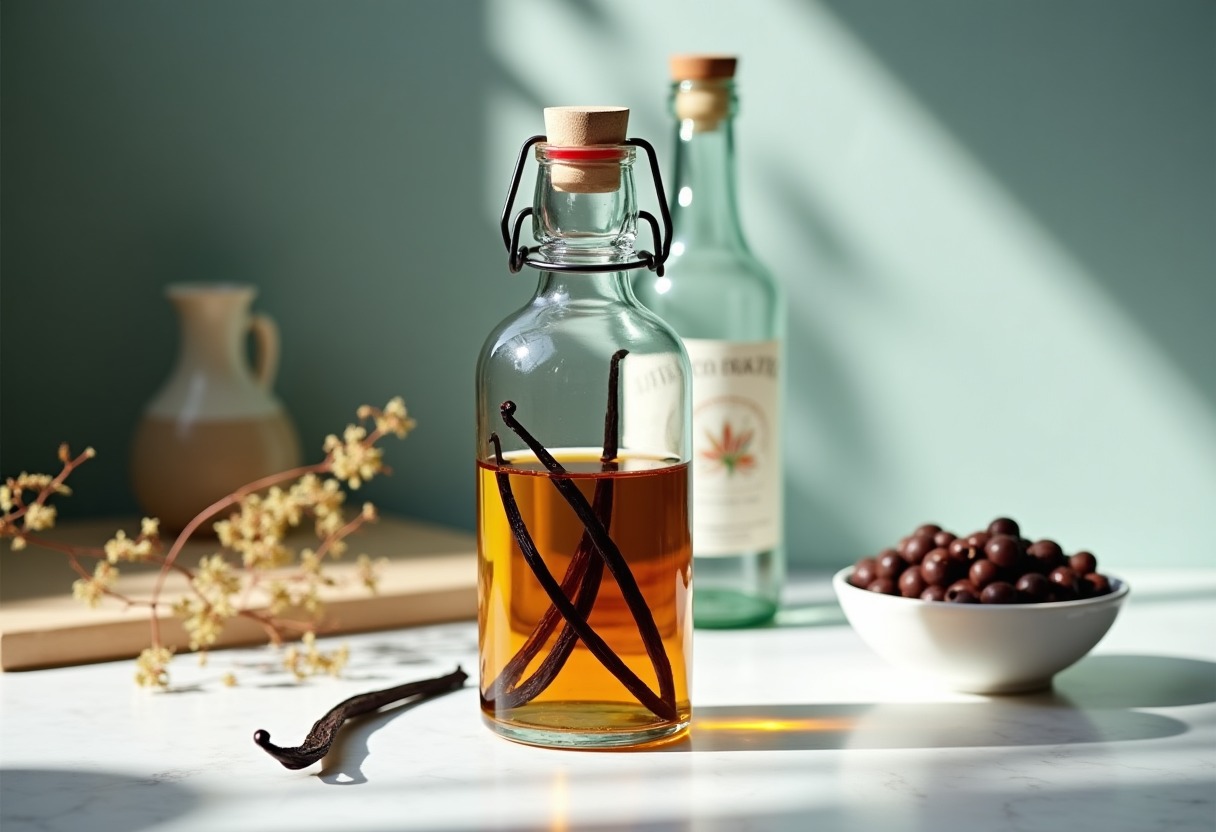
- Pour 8 oz gin over beans until fully submerged
- Seal and store in cool, dark location
- Shake weekly for first month, then monthly
- Age minimum 8 weeks; 12-16 weeks develops fuller flavor
The type of gin you choose matters more than the bean-to-alcohol ratio. A London Dry gin produces fundamentally different extract than an Old Tom or a contemporary botanical gin.
Matching Gin Styles to Vanilla Bean Origins
Not all gin-and-bean combinations work. Madagascar vanilla pairs poorly with heavily floral gins. Tahitian beans get lost in juniper-forward London Dry styles. This table shows tested pairings based on botanical compatibility:
| Gin Style | Best Bean Origin | Why It Works | Avoid With | |-----------|------------------|--------------|------------| | London Dry (Tanqueray, Beefeater) | Mexican vanilla beans | Juniper's pine notes complement Mexican's spice and woody character; citrus peels brighten vanilla's natural almond undertones | Tahitian beans — delicate floral notes get overpowered by juniper | | Contemporary botanical (Hendrick's, Monkey 47) | Tahitian vanilla beans | Rose, cucumber, or elderflower botanicals echo Tahitian's natural cherry-anise florality | Mexican beans — too heavy for delicate botanical profiles | | Old Tom (Hayman's) | Madagascar Bourbon vanilla | Slight sweetness matches Madagascar's creamy vanilla character; balanced botanicals don't compete | Ugandan beans — earthy chocolate notes clash with Old Tom's sweetness | | Navy strength (Plymouth, Perry's Tot) | Papua New Guinea vanilla | High proof (57% ABV) extracts more compounds from earthy, fruity PNG beans; intense flavor stands up to strong botanicals | Grade A Madagascar — overpowers delicate cream notes |
For most home extractors starting with gin vanilla, pair London Dry gin with Mexican beans or contemporary botanical gin with Tahitian beans. These combinations deliver the clearest "this tastes different and better" response.
If you're working with Madagascar beans — the most common variety — use a balanced, middle-of-the-road gin like Tanqueray or Bombay Sapphire. Avoid heavily juniper-forward gins (Beefeater) or ultra-botanical gins (Hendrick's) that overshadow Madagascar's classic vanilla cream character. Our guide on Best Vanilla Beans For Extract covers origin profiles in detail.
Adjusting Extract Strength and Aging Time
Gin extracts vanilla compounds at roughly the same rate as vodka, but the botanical oils affect perceived strength. Extract that tastes "ready" at 8 weeks in vodka might need 10-12 weeks in gin because the competing flavors mask vanilla's development.
Test extraction strength starting at 8 weeks using the same method as vodka-based extract: smell for vanilla dominance over alcohol, taste for smooth vanilla without harsh burn, and check visual clarity for suspended vanilla particles. Our Vanilla Extract Strength Test guide walks through evaluation steps.
Aging timeline for gin vanilla extract:
- Weeks 1-4: Gin botanicals dominate; vanilla barely detectable except as raw bean aroma
- Weeks 5-8: Vanilla begins emerging; extract smells like "gin with vanilla" rather than vanilla extract
- Weeks 9-12: Vanilla overtakes gin botanicals; extract reads as "botanical vanilla" rather than "gin"
- Weeks 13-20: Flavors fully integrate; botanical notes become subtle background rather than foreground
Most extractors find gin vanilla peaks between 12-16 weeks, then stays stable for 12-18 months before botanical oils begin fading. Unlike vodka extract which improves almost indefinitely, gin extract has a flavor window where botanical complexity shines before degrading.
Store finished extract in → Shop glass extract bottles amber on Amazon to protect botanical compounds from light degradation. Our post on Best Glass Bottles Vanilla Extract Storage covers bottle selection in detail.
What Most Guides Miss: Botanical Load Matters
The biggest mistake in gin vanilla extract is choosing high-botanical-count gins. Gins with 15+ botanicals (Monkey 47, The Botanist) create extract that tastes muddled — too many competing flavors, no clear vanilla or gin character. Stick with gins listing 5-10 botanicals for cleaner results.
Recommended gins by botanical count:
- Tanqueray (4 botanicals): Juniper, coriander, angelica, licorice — classic profile that lets vanilla shine
- Bombay Sapphire (10 botanicals): Balanced complexity without overwhelming vanilla
- Plymouth (7 botanicals): Earthy, slightly sweet, works with most bean origins
- Hendrick's (11 botanicals): Upper limit for botanical complexity; only use with robust beans like Mexican or Papua New Guinea
Avoid flavored gins, sloe gins, or gins with added sweeteners. These create extract that tastes artificial in baked goods and doesn't integrate properly during aging.
One technique that works exceptionally well: split-batch extraction. Make two 4 oz batches instead of one 8 oz batch, using different gin styles with the same beans. After 12 weeks, blend the extracts to create a custom botanical profile. This approach lets you balance juniper-forward character against floral or citrus-forward character based on your baking preferences.
Consider reusing beans after your first gin extraction. Our guide on Reuse Vanilla Beans After Extract explains how exhausted beans still contain 30-40% of their original vanilla compounds. For second-use gin extraction, increase beans to 1.5 oz per 8 oz of gin to compensate for depleted vanillin.
Product Recommendations for Gin Vanilla Extract
You need quality vanilla beans, the right gin, and proper storage bottles. Here's what to buy:
Vanilla beans: Grade A beans work better than Grade B in gin extract because you want moisture content that extracts cleanly without adding raw bean flavor. Look for → Shop vanilla beans whole grade a on Amazon with 30-35% moisture content and pliable texture. Our Grade A Vs Grade B Vanilla Beans comparison explains why grade A suits botanical spirits.
Gin selection: Start with a London Dry gin at 40-44% ABV. Tanqueray, Beefeater, or Gordon's all work well and cost $20-30 per 750ml bottle. Avoid spending $40+ on premium gins for extract — the botanical nuances that matter in cocktails don't translate to baked goods after months of aging.
Bottles: Use 8 oz swing-top bottles or amber Boston rounds with phenolic caps. Swing-tops make weekly shaking easier during active extraction. Amber glass protects botanical oils from UV degradation better than clear glass.
Kits: If you want a complete setup, → Shop vanilla bean extract making kit on Amazon includes bottles, beans, and labels. Verify the kit includes Grade A beans and glass bottles, not plastic.
For extractors making multiple batches, buy beans by the half-pound from specialty suppliers rather than Amazon's per-ounce pricing. Our Best Bourbon Vanilla Beans 2026 roundup includes bulk suppliers.
Using Gin Vanilla Extract in Recipes
Gin vanilla extract works differently than vodka extract in baking. The botanical oils affect how vanilla integrates with other flavors. Use it where complexity benefits the final product; skip it where pure vanilla matters most.
Where gin vanilla extract excels:
- Shortbread and butter cookies — botanical notes complement butter's natural cream flavor
- Stone fruit desserts — gin's citrus botanicals brighten peach, plum, and apricot
- Chocolate desserts with nuts — juniper's pine character echoes almond and hazelnut oils
- Custards and puddings — floral botanicals add dimension to egg-and-cream bases
- Cocktails and mocktails — use as finishing drops where botanical complexity shows
Where vodka extract works better:
- Vanilla buttercream or frosting — gin's botanicals taste odd in pure vanilla applications
- Angel food cake and sponge cakes — delicate crumb needs pure vanilla, not layered flavor
- Vanilla ice cream — unless you specifically want botanical vanilla ice cream, stick with vodka extract
- Recipes calling for vanilla bean paste — the botanical profile clashes with paste's suspended seeds
Replace vodka extract 1:1 with gin extract in most recipes. The alcohol content is identical, so baking times and temperatures don't change. The flavor difference emerges most clearly in recipes with minimal competing flavors — simple sugar cookies taste noticeably different, while spice-heavy gingerbread masks the botanical complexity.
If you're comparing gin extract to commercial options, our Best Store Bought Vanilla Extracts Ranked guide provides baseline flavor expectations. Gin extract should taste more complex than pure vanilla extract, less "vanilla-only" than imitation extract.
FAQ
Can I use flavored gin or sloe gin for vanilla extract? No. Flavored gins contain added sugars and artificial flavorings that create extract with off flavors and unstable aging profiles. Stick with unflavored London Dry or contemporary botanical gins at 40% ABV minimum.
Does gin vanilla extract taste like gin in baked goods? The alcohol cooks off during baking, taking most of gin's sharp juniper bite with it. What remains is botanical complexity — subtle citrus, spice, or floral notes that read as "interesting vanilla" rather than "gin." You won't taste juniper in chocolate chip cookies made with gin vanilla.
How many vanilla beans do I need for a full bottle of gin? For a standard 750ml (25 oz) bottle of gin, use 3-4 oz of vanilla beans — approximately 15-20 Grade A beans. This maintains the 1 oz beans per 8 oz alcohol ratio that produces properly concentrated extract meeting FDA standards for vanilla extract.
Can I mix vodka and gin in the same extraction batch? Yes. A 50/50 vodka-gin blend creates extract with moderate botanical character — less intense than pure gin, more interesting than pure vodka. This works well if you find straight gin extract too complex but want something beyond neutral vodka flavor. Use the same bean ratio.
Should I remove the beans after aging is complete? No. Leave beans in the bottle indefinitely. They continue contributing flavor compounds as long as extract remains, and removing them can introduce bacteria or oxygen that degrades the extract. Our guide on When Vanilla Extract Ready covers this aging principle in detail.
The Bottom Line on Botanical Vanilla Extract
Gin creates vanilla extract with flavor layers vodka can't deliver — but only when you match gin style to bean origin and choose bottles with restrained botanical counts.
Some links on this page are affiliate links. We may earn a small commission if you purchase through them, at no extra cost to you.
As an Amazon Associate we earn from qualifying purchases. This article contains affiliate links; if you buy through them we may earn a small commission at no additional cost to you.