
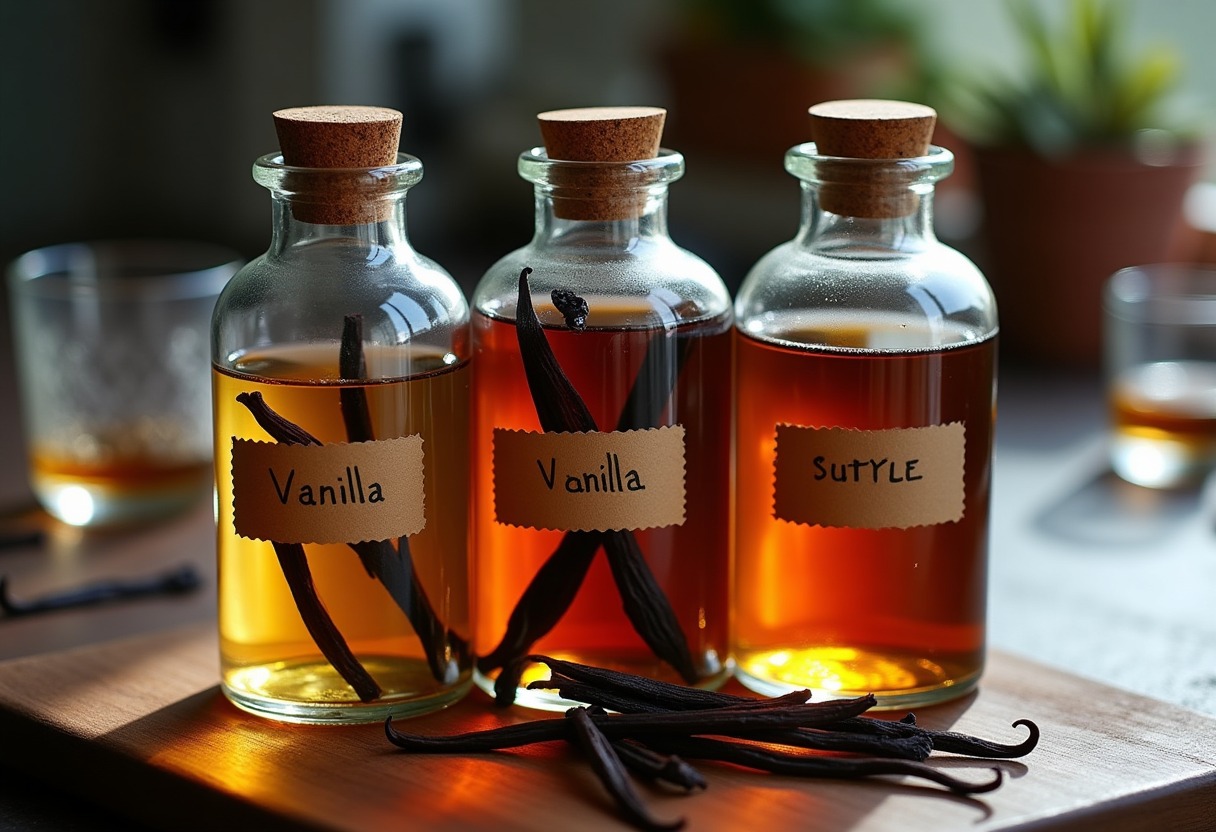
Whiskey-based vanilla extract brings warmth, complexity, and subtle oak notes that vodka simply can't match. The alcohol's existing flavor profile becomes part of your extract, creating depth that works exceptionally well in brown butter cookies, bourbon balls, and dark chocolate desserts.
Why Whiskey Works Differently Than Vodka
Unlike vodka's clean extraction profile, whiskey contributes its own character to vanilla extract. The grain notes, barrel aging, and congeners (flavor compounds that survive distillation) interact with vanillin and other vanilla compounds during the extraction process. This creates a layered flavor rather than pure vanilla. The FDA requires vanilla extract to be made with 35% alcohol by volume minimum, which covers most whiskey types naturally.
Whiskey's existing flavor compounds mean you're making a flavored extract, not just vanilla. This matters for recipe selection. Where vodka-based vanilla disappears into batter, whiskey vanilla announces itself with caramel, spice, or smoke depending on your whiskey choice. I use whiskey vanilla specifically in recipes where those notes enhance the final dish—not as my all-purpose extract.
The aging process differs too. While vodka vanilla reaches baseline extraction in 8-12 weeks, whiskey vanilla benefits from longer aging. The oak tannins and congeners need time to mellow and integrate with vanilla compounds. I don't consider whiskey extract ready until 4-6 months minimum, with noticeable improvement up to 12 months. Learn more about aging timelines in our guide on Vanilla Extract Aging Time.
Which Whiskey Types Work Best for Vanilla Extract
Bourbon creates the most approachable whiskey vanilla. Its corn-forward mashbill (at least 51% corn by law) contributes sweetness and caramel notes that complement vanilla naturally. The charred oak barrel aging adds vanilla-like compounds already, creating a reinforcing effect. Bourbon vanilla works in chocolate chip cookies, bread pudding, and anything with brown sugar or molasses. → Shop bourbon whiskey alternatives on Amazon
Rye whiskey brings spice and bite. The high rye content (51% minimum) creates a peppery extract with sharp edges that work in gingerbread, spice cakes, and autumn desserts. Rye vanilla has more pronounced grain character and less sweetness than bourbon. It's my choice for anything with cinnamon, nutmeg, or clove. → Shop rye whiskey on Amazon
Irish whiskey produces the smoothest whiskey vanilla. Triple distillation removes more congeners, creating a lighter extract that sits between vodka and bourbon in flavor intensity. Irish whiskey vanilla works when you want subtle whiskey notes without overwhelming vanilla—think vanilla buttercream, pound cake, or delicate custards. → Shop irish whiskey on Amazon
Scotch whisky (note the spelling) creates polarizing results. Peated Islay scotch produces smoky vanilla that works in exactly three contexts: dark chocolate ganache, coffee-based desserts, and experimental ice cream. Highland or Speyside scotch gives you honey and fruit notes with less smoke. Most bakers find scotch vanilla too assertive for general use, but when it works, it's unforgettable. → Shop scotch whisky on Amazon
Proof Requirements and Alcohol Content
Whiskey proof directly affects extraction efficiency. The 35% alcohol minimum exists because vanillin and other flavor compounds dissolve better in alcohol than water. Most whiskeys sit at 80 proof (40% ABV), which works but isn't optimal. Higher proof whiskey extracts more compounds faster and creates a more concentrated final product.
I prefer 90-100 proof whiskey for vanilla extraction. This 45-50% ABV range gives you strong extraction without the harsh alcohol burn of barrel-proof whiskey. The extra alcohol pulls more vanillin from beans and creates a more shelf-stable extract. If you're using standard 80-proof whiskey, extend your aging time by 4-6 weeks to compensate for slower extraction.
Barrel-proof whiskey (120+ proof) needs dilution. At 60% ABV or higher, the alcohol overwhelms vanilla compounds and creates harsh extracts that need years to mellow. If you have cask-strength whiskey you want to use, cut it with distilled water to 45% ABV before adding beans. Calculate dilution with this ratio: for every cup of 120-proof whiskey, add 0.6 cups water to reach approximately 90 proof.
Temperature affects alcohol extraction efficiency, but don't heat your whiskey vanilla. While gentle warmth speeds extraction in vodka-based vanilla, it drives off whiskey's volatile aromatics—the very compounds that make whiskey vanilla distinct. Room temperature extraction (65-75°F) preserves both vanilla and whiskey character.
Matching Whiskey Type to Vanilla Bean Origin
| Whiskey Type | Best Bean Match | Flavor Result | Ideal Uses | |--------------|----------------|---------------|------------| | Bourbon | Madagascar | Caramel-vanilla with creamy finish | Chocolate desserts, brown butter recipes, bourbon balls | | Rye | Mexican | Spicy vanilla with cinnamon undertones | Gingerbread, spice cakes, apple desserts | | Irish Whiskey | Tahitian | Floral vanilla with smooth finish | Buttercream, custards, delicate cakes | | Scotch (unpeated) | Ugandan | Complex vanilla with fruit notes | Coffee desserts, dark chocolate, experimental baking |
The bean origin matters as much as whiskey choice. Madagascar beans (Best Bourbon Vanilla Beans 2026) work with any whiskey but shine with bourbon. Their creamy, classic vanilla profile balances bourbon's sweetness without competing. Mexican beans add complementary spice notes to rye whiskey, creating extracts that taste like liquid gingerbread. Tahitian beans need lighter whiskey like Irish—their floral cherry notes get buried under heavy bourbon or rye.
For whiskey vanilla extract, I use 6-8 beans per cup rather than the standard 5-6 for vodka. The whiskey's existing flavor takes up sensory space, so you need more vanilla compounds to achieve the same vanilla-forward profile. Use Grade B beans for extraction efficiency—their lower moisture content and higher vanillin concentration works better in alcohol with existing flavor compounds. Read more about bean grades in Grade A Vs Grade B Vanilla Beans.
Split your beans lengthwise and scrape out the caviar if you want faster extraction, or leave them whole for cleaner filtering later. The method in Split Vanilla Beans Extract explains both approaches. Store your whiskey extract in amber glass bottles to protect both vanilla and whiskey compounds from light degradation. → Shop glass extract bottles on Amazon
Advanced Techniques Most Guides Skip
Double extraction works differently with whiskey than vodka. The standard double-fold method involves using beans twice, but with whiskey, the second extraction picks up more oak tannins than additional vanilla. Instead, add fresh beans at the 6-month mark without removing the original beans. This creates complexity layers without the tannic bitterness you'd get from fully exhausted beans. More on this technique in Double Extract Vanilla Beans.
Blending whiskey types creates custom profiles. A 50/50 bourbon-rye blend gives you sweetness with spice. Mixing Irish whiskey with a small amount of peated scotch (10-15%) adds smoke hints without overpowering vanilla. Blend the whiskeys before adding beans—don't try to blend finished extracts. The bean-alcohol interaction needs to happen with your final whiskey blend.
Proof testing throughout aging reveals when whiskey vanilla hits its peak. Use a hydrometer to track alcohol content monthly. When the proof stabilizes (stops dropping), extraction has slowed significantly. This usually happens around month 4-5. If you want stronger vanilla character, add 1-2 fresh beans at this point rather than waiting longer with the original beans.
Secondary flavoring works well with whiskey vanilla. Add a cinnamon stick, dried orange peel, or coffee beans after the initial 3-month extraction period. These additions integrate with whiskey's existing complexity better than they do with vodka. Remove secondary flavorings after 2-4 weeks—they extract faster than vanilla and can overpower the extract if left too long.
Finishing techniques from whiskey barrel aging apply to vanilla extract. After 6 months of extraction, strain your extract and age it an additional 3 months in the bottle without beans. This "finishing" period allows flavors to marry and harsh alcohol notes to mellow, just like whiskey does in the barrel. The result tastes more integrated than freshly strained extract.
FAQ
Does whiskey vanilla extract taste like whiskey? Yes, noticeably so in the first 4-6 months, then the whiskey notes integrate and mellow. The final extract tastes like vanilla with whiskey's warmth and complexity rather than straight whiskey flavor. In baked goods, the alcohol evaporates but the oak and grain notes remain.
Can I use cheap whiskey for vanilla extract? Bottom-shelf whiskey creates harsh extracts that need 12+ months to become usable. Mid-range whiskey ($25-40 per bottle) gives you the best value—quality barrel aging and decent flavor without paying for premium branding. Avoid anything under $20 unless you're willing to age it for a year.
How does whiskey vanilla compare to rum vanilla? Whiskey vanilla has oak, grain, and sometimes smoke notes while rum vanilla brings molasses, caramel, and tropical fruit character. Whiskey works better in autumn desserts and chocolate applications. Rum excels in tropical desserts and summer baking. See our How To Make Vanilla Extract With Rum guide for direct comparison.
Should I filter whiskey vanilla extract before using it? Yes, after 6 months minimum, strain through cheesecloth or coffee filters to remove bean particles and sediment. Whiskey vanilla develops more sediment than vodka vanilla due to oak tannins and congeners. The sediment won't hurt you but creates texture issues in light-colored frostings and custards.
Can I reuse vanilla beans after making whiskey extract? The beans will be exhausted after 8-12 months in whiskey and won't produce good second-batch extract. Instead, rinse them briefly, dry them completely, and grind them into vanilla powder for dry rubs or sugar blends. They retain some flavor even after extraction finishes. More ideas in Reuse Vanilla Beans After Extract.
Whiskey vanilla extract rewards patience with complexity you won't find in store-bought versions—just choose your whiskey type as carefully as you'd choose your beans, and give it the aging time it needs to develop properly.
Some links on this page are affiliate links. We may earn a small commission if you purchase through them, at no extra cost to you.
As an Amazon Associate we earn from qualifying purchases. This article contains affiliate links; if you buy through them we may earn a small commission at no additional cost to you.